AI & automation
AI and automation for your merchandising: less production, more decisions.
At Retail VR, AI and automation serve one simple goal: less time on data entry and production, more time on decisions. 3D modeling, planogram segmentation into blocks, store-by-store variants, planograms created in natural language: here is what they do in our platform.
Request a demoLess busywork. More thinking.
Merchandising teams spend up to 70% of their time in Excel, on data entry and on producing plans. Our AI takes on these repetitive tasks, step by step, to free up time for what matters: analysis, negotiation and strategy.
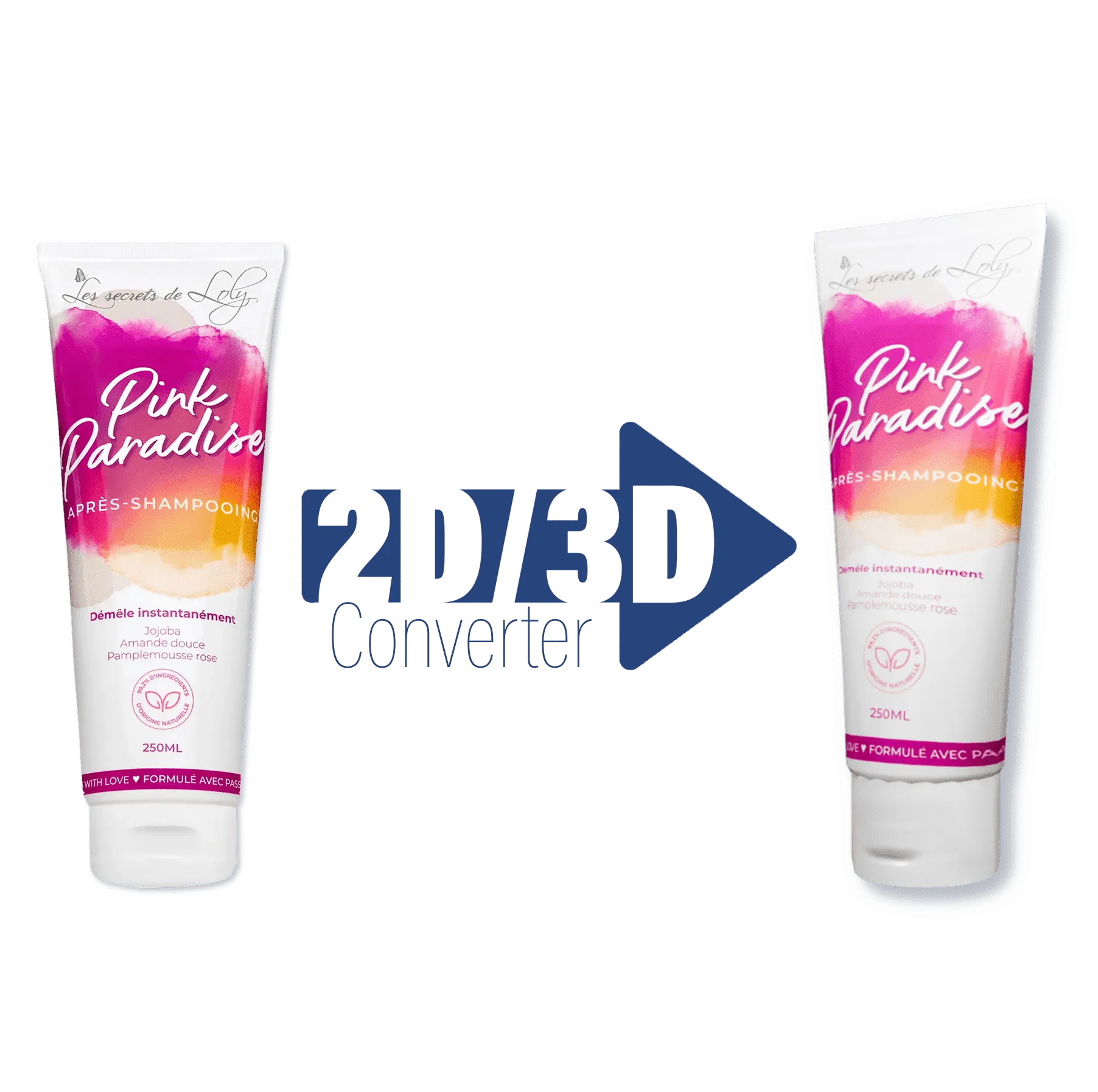
Your 2D product images automatically turned into 3D models, thanks to our patented technology.
An algorithm that segments your planograms into blocks and adapts the plan by cluster or by store. Up to 80% less creation time.
Describe the planogram you want in a few words: the AI builds it for you.
AI handles the production. Assortment, visibility and negotiation choices remain yours.
AI-POWERED 3D MODELING
Your products in 3D, automatically.
Our patented technology uses AI to turn your 2D product images into accurate 3D models, with no manual modeling. It is the foundation of your planograms, virtual stores and store layout guides.
done
A 2D photo becomes a 3D model, thanks to patented technology
done
Thousands of SKUs modeled at scale
done
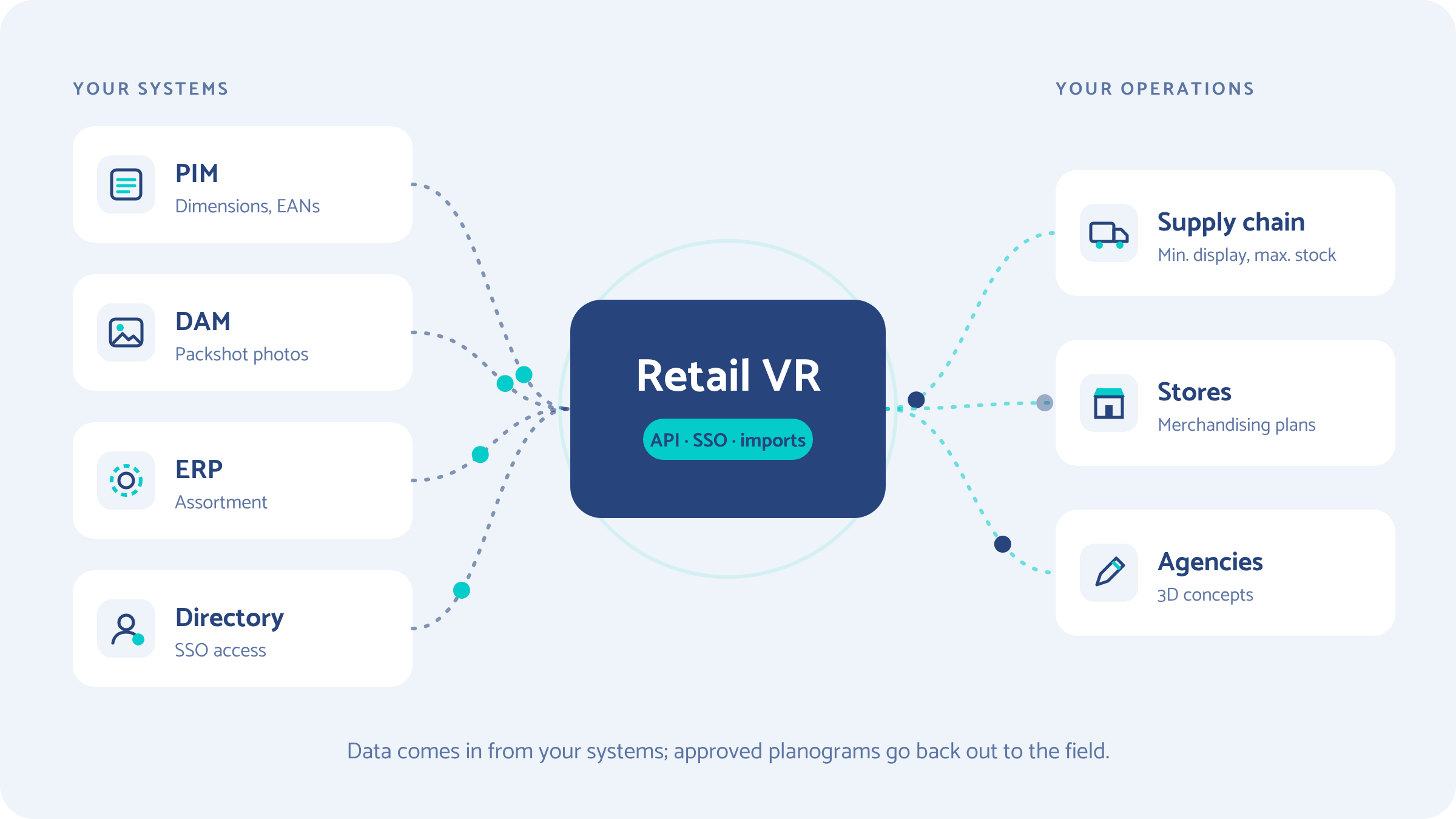
A library fed from your PIM or DAM via API
Two ways to generate your planograms.
Let the algorithm split the plan into blocks, or simply describe the result you want to the AI. Either way, your teams keep the final approval.
An algorithm that segments your planograms into blocks.
Our algorithm automatically splits the planogram into consistent blocks (brands, segments, formats) based on product dimensions, fixtures, your sales data and your merchandising rules, then adapts the plan by cluster or by store. It is designed to cut planogram creation time by up to 80%, while your teams stay in control to adjust and approve every plan. See it in action in a demo.
Automatic segmentation of the plan into blocks: brands, segments, formats
Respects dimensions, fixtures, your rules and your sales data
Plans adapted by cluster or by store
Create your planograms in natural language, with AI.
Simply describe the result you want, for example: “Create a grocery planogram for the coffee aisle, capsules at eye level and private labels at the bottom.” Connected to Retail VR, the AI uses your brands, products and rules to build the planogram, which your teams then adjust and approve.
Requests written in plain language, no technical handling
The AI draws on your brands, products, data and rules
Your teams keep the final approval
Secure, governed and profitable AI.
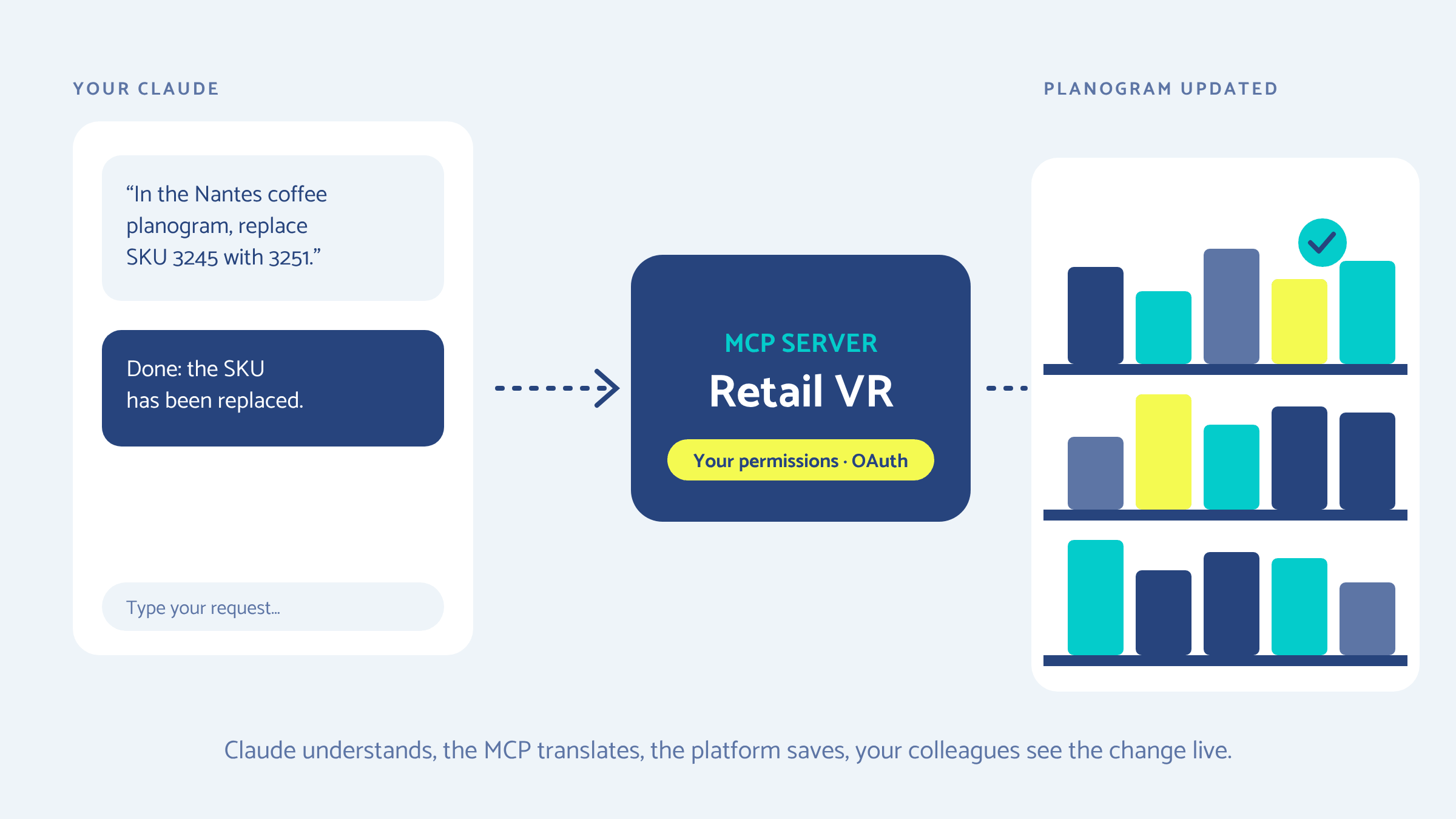
An AI assistant connected to the platform through an MCP server, in a secure environment.
Security: meets your IT department's requirements
Governance: actions governed by user rights
ROI: measurable time savings
Less production, more time to analyze.
Building, adapting, adjusting, reproducing: much of merchandising time still goes into production. AI and automation cut this operational time by 60 to 80% and give it back to your teams. Time to analyze, challenge, test and decide. AI does not replace business expertise: it gives it the time to make a difference.
Category managers: more time to analyze performance, challenge the assortment and make recommendations to retailers
Trade marketing: more time to test new displays and measure what works
Field teams: accurate 3D plans, applied faster, and more time to report what happens on the shelf
AI-powered 3D, already in the field.
Featured by LSA Commerce & Consommation, Léa Nature and Botanic show what 3D and AI change in practice: a clearer offer for retailers, and layouts that are better applied in store.

Léa Nature: a clearer multi-category offer
Food, personal care, organic cosmetics: the brand must show retailers complete brand worlds (corners, POS, islands).
AI automatically turns 2D product images into 3D models, which are then placed in virtual stores.
The retailer sees the proposal exactly as it will look on the shelf.
Patented technology, no manual modeling.

Botanic: securing execution on custom fixtures
Wooden fixtures with unusual dimensions: store teams need to know exactly what to set up, and where.
3D plans that match the real fixtures, shared with every store.
Layouts are applied far more accurately on the shelf.
What these two stories show
3D shows complete brand worlds, instead of describing them on a flat plan.
Plans that match the fixtures secure execution in the field.
AI and automation speed up the production of 3D models and planograms.
Discover how AI is transforming merchandising.
Download our AI & merchandising white paper, or request a demo to see AI-powered 3D modeling applied to your own products.
Download the white paperFAQ: artificial intelligence at Retail VR
Does Retail VR use artificial intelligence?
expand_more
Yes. Retail VR's AI automatically turns your 2D product images into 3D models, using patented technology. An algorithm segments your planograms into blocks and adapts them store by store, and a natural language AI assistant creates planograms from a simple description of the result you want.
How does AI create 3D products?
expand_more
Our patented technology starts from your 2D product images and automatically generates an accurate 3D model, with no manual modeling. Processing runs at scale, across thousands of SKUs, and images can be imported from your PIM or DAM via API.
Can AI generate my planograms?
expand_more
Yes, in two ways. Our algorithm automatically segments the planogram into blocks and places products based on their dimensions, fixtures, your sales data and your merchandising rules: it is designed to cut creation time by up to 80%. With AI, you can also describe the planogram you want in natural language. Either way, your teams stay in control to adjust and approve every plan in Planogram Studio.
Can I get a different plan for each store?
expand_more
Yes. The algorithm starts from a reference plan and automatically adapts it by cluster or by store, based on each store's fixtures, dimensions and sales data.
What data does the AI use?
expand_more
Product images and dimensions, fixture specifications, your sales data and your merchandising rules. This data is imported via API (PIM, DAM, ERP) or by file.
How can I see the AI and automation in action?
expand_more
Request a demo from our team: we will show you AI and automation applied to your own products and fixtures.
Our latest articles on in-store merchandising and retail innovation

Seasonal Peaks: Test the Shopper Journey and POS in 3D Before the In-Store Rollout
Connecting Claude to Retail VR: How Our MCP Server Works
Integrating Merchandising Software into Your IT Stack: API, PIM, SSO and Open Formats