

Introduction
After the DIY boom of the Covid period, the market is experiencing a slowdown in 2024, with a 7.5% drop in sales. Faced with this situation, retailers are having to review their strategies to boost sales and maintain their appeal. Improved merchandising and new in-store concepts are emerging as key solutions for meeting new consumer expectations and optimizing the shopping experience.
New dynamics in the DIY sector
The impact of the post-Covid slowdown
The DIY sector enjoyed exceptional growth between 2020 and 2022, driven by consumer enthusiasm for interior design and renovation. However, in 2024, the trend is reversed, with the market contracting (-7.5%), due to several factors:
- A return to pre-pandemic consumption habits.
- Inflation, which weighs on purchasing power and puts the brakes on household projects.
- Market saturation after a period of strong demand.
Faced with this economic situation, DIY chains need to reinvent themselves to attract new customers and retain their existing ones. Rethinking concepts, getting closer to customers, or facilitating the often complicated shopping experience - these are just a few examples that caught our attention.
A discreet but effective overhaul of store concepts
Rather than giving in to advertising hype, some chains are taking a more subtle approach by gradually transforming their sales areas. Bricorama, for example, is implementing a complete overhaul of its concept with the NEC (New Customer Experience) project, aimed at improving the in-store shopping experience and proposing an offer better adapted to modern expectations(source).

In the same vein, Castorama has completely redesigned its stores to modernize the customer experience, with a clearer product display and improved aisle circulation(source). These two brands have put customers back at the center of the game, with dedicated spaces and a clearer, more legible offering.
Adapting store formats: redesigning a concept for greater proximity
In response to changing consumer expectations, some chains are focusing on more compact, accessible formats. Mr.Bricolage recently launched its "Relais" concept to get closer to customers and reinforce proximity in urban areas(source). This model optimizes sales space while offering a more fluid and efficient experience.

The brand is planning to expand rapidly, with 15 new openings, testifying to the appeal of this format and its potential to revitalize the market(source).
Digital innovation to enhance the customer experience:
in-store geolocation, the needle in the straw.
The integration of digital technology at the point of sale remains an essential lever. Leroy Merlin is well aware of this, and is deploying in-store geolocation with Hanshow and its electronic tags. To help customers quickly find the products they're looking for(source / Leroy Merlin guides its customers through its points of sale via electronic labels - La Revue du Digital) from among the 50,000 references available in a sales outlet, customers can now follow their way to the chosen references using their mobiles and easily locate the product in the aisle that will be indicated by the flashing label.
And also the mute salesman at the service of a lost customer
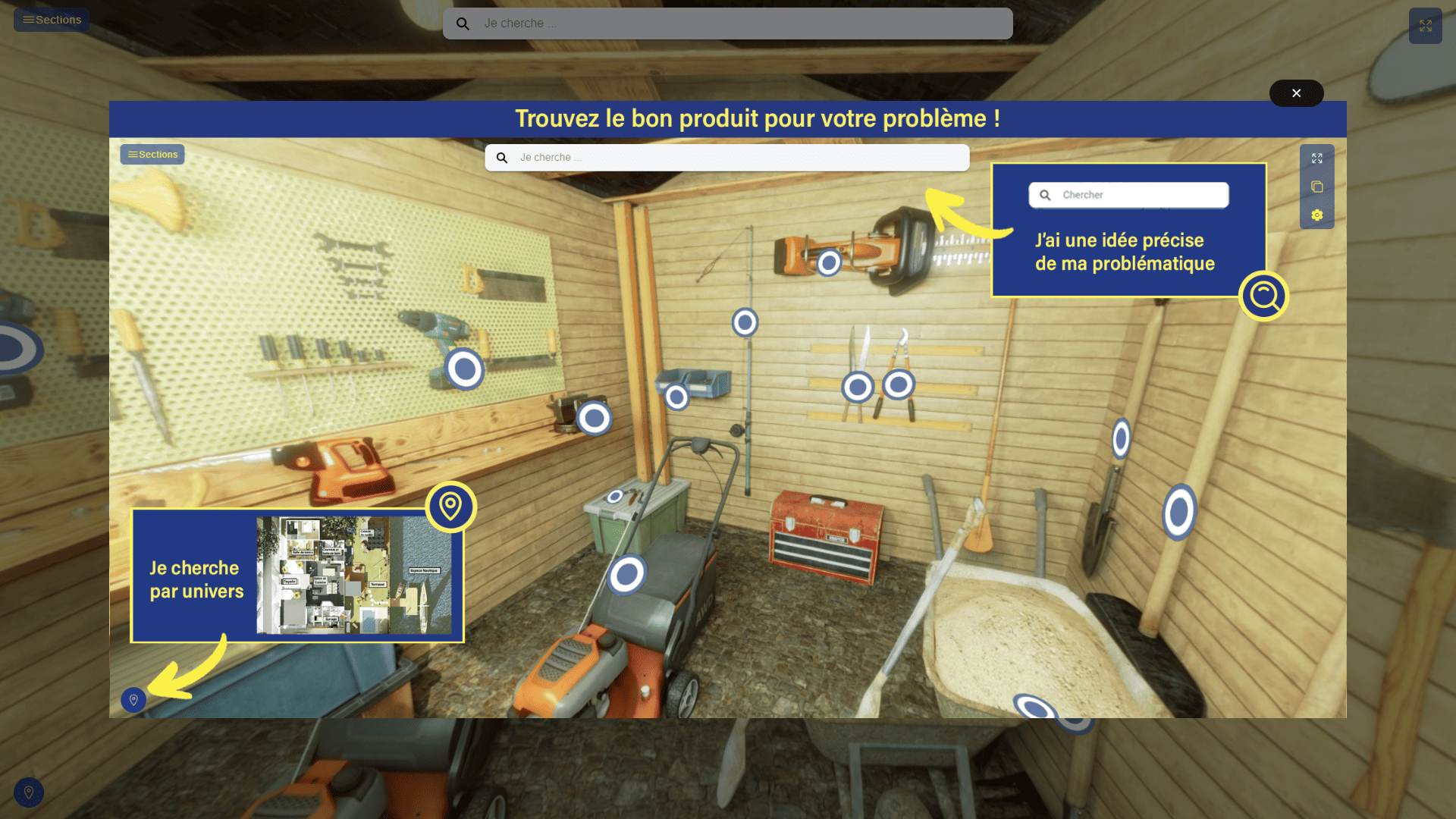
In a different vein, WD-40 is rolling out its silent sales assistant in several stores (Bricomarché, Castorama, Leroy Merlin etc.). The idea stems from a sad fact: 30% of users leave the aisle without having found the lubricant best suited to their specific use. The WD-40 teams came up with and deployed the silent sales assistant to remedy this problem. It's very simple to use: an ILV with a QR code is displayed in-store/ It allows users to enter a virtual showroom via their smartphone, a virtual house with a garden, which illustrates all the use cases for WD40 lubricants through everyday objects. Need a lubricant for a drill or an electrical appliance? A search engine that brings together some 1,000 possible uses for the brand's products. The icing on the cake is that if the product reference is not available on the shelf, the customer can simply switch to the point-of-sale market place and order it. The certainty of having the right product for the right use(source)
These innovations proposed by retailers and brands not only enhance the customer experience, but also optimize point-of-sale efficiency.
Conclusion
As the DIY sector goes through a period of slowdown, retailers are adapting by modernizing their concepts and integrating new digital solutions. Optimizing merchandising, in particular through 3D and digitalized customer paths, not only boosts sales, but also enhances the in-store experience. Against this backdrop, the players who know how to innovate while remaining close to consumer expectations will have a strategic advantage to get through this phase of market transformation.