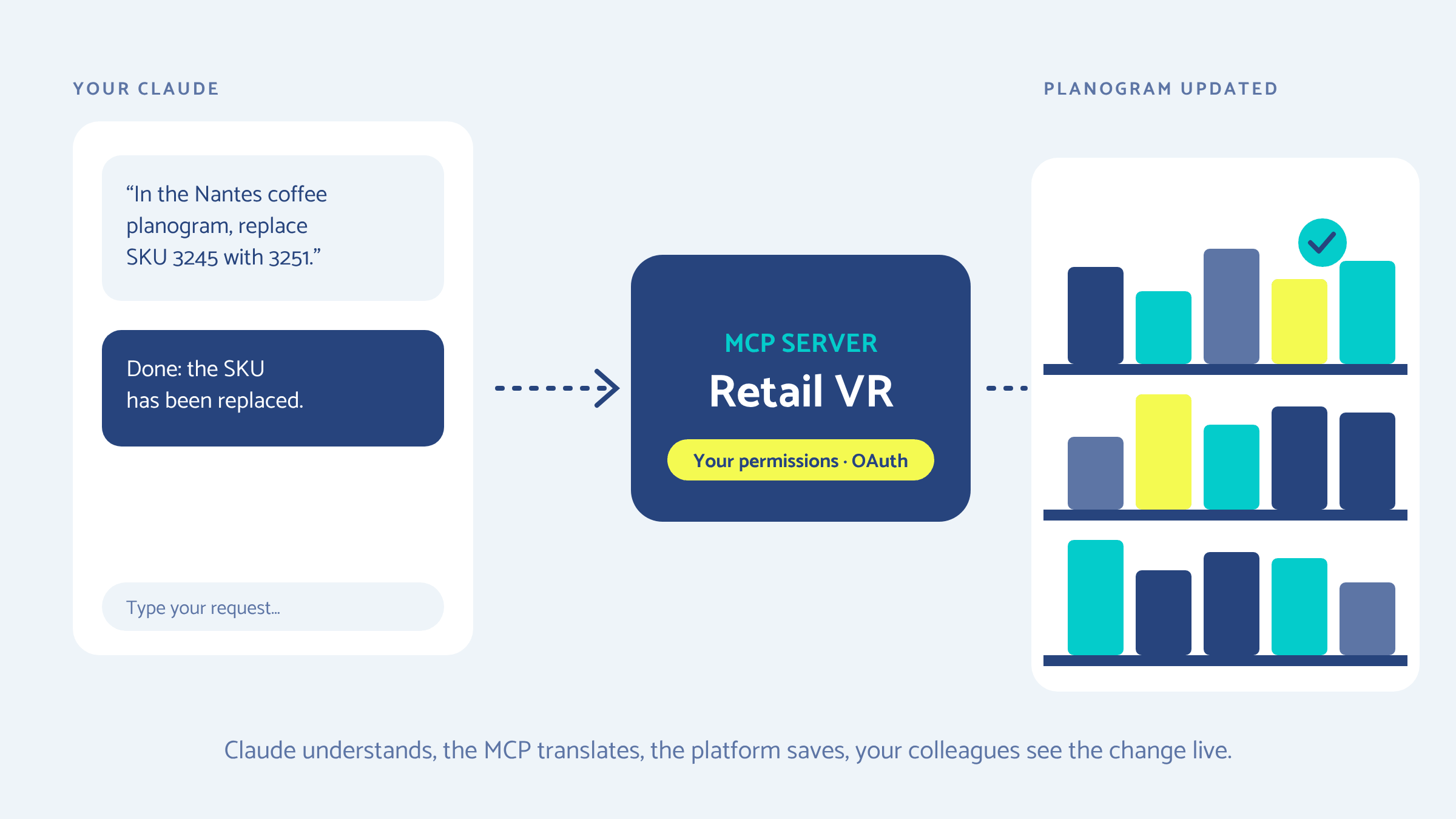


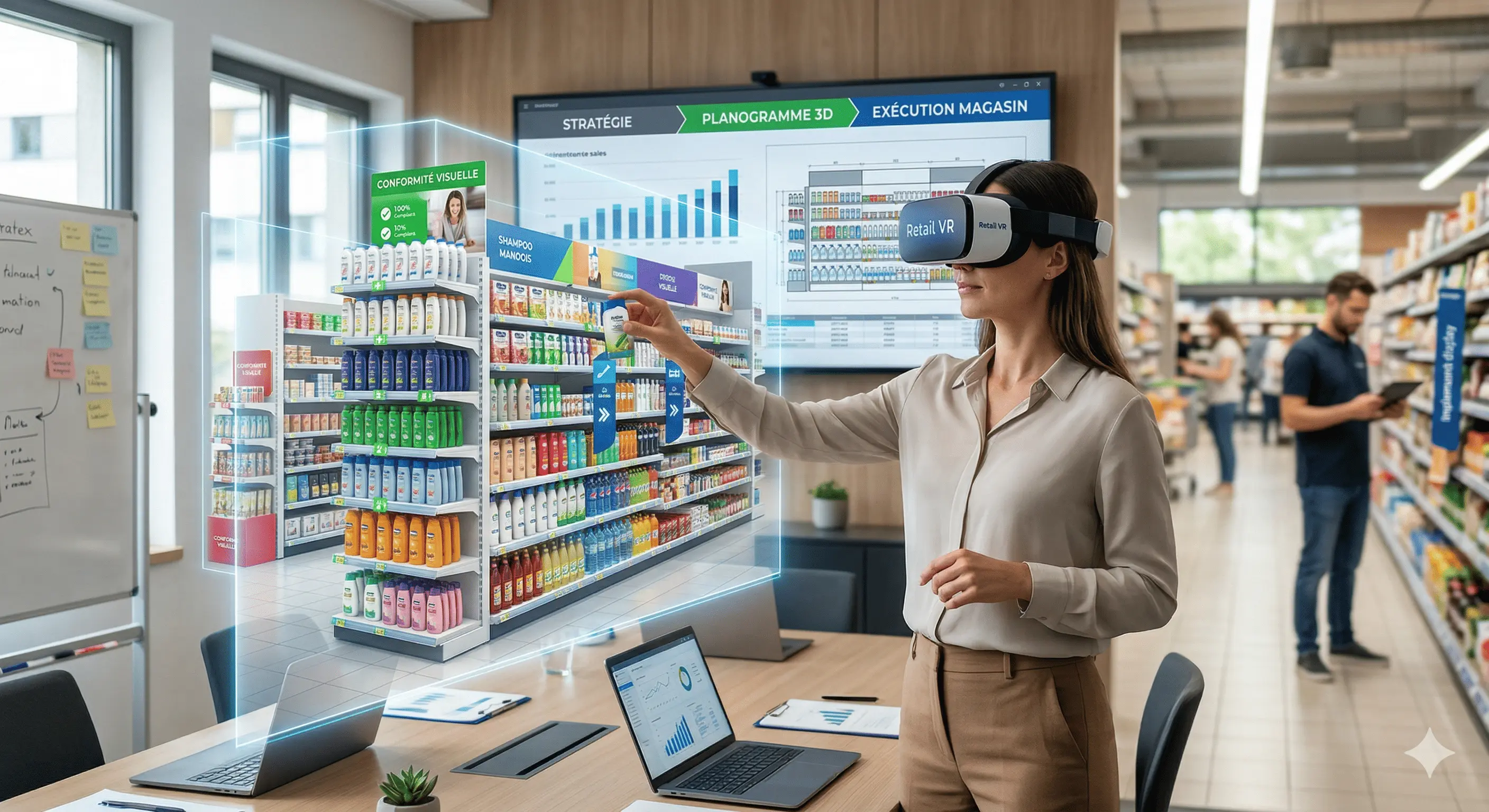
Did you know that nearly half of all store layouts do not fully comply with headquarters’ original guidelines? The gap between the strategy devised in the office and the reality on the ground remains a major challenge.
In many retail and FMCG organizations, the situation is the same: ambitious trade marketing strategies and carefully designed planograms are met with inconsistent and uneven execution at the store level. The gap between headquarters’ vision and the reality at the point of sale leads to fragmentation. The result? A loss of direct impact, a dilution of the brand message, and a chronic difficulty in measuring actual performance.
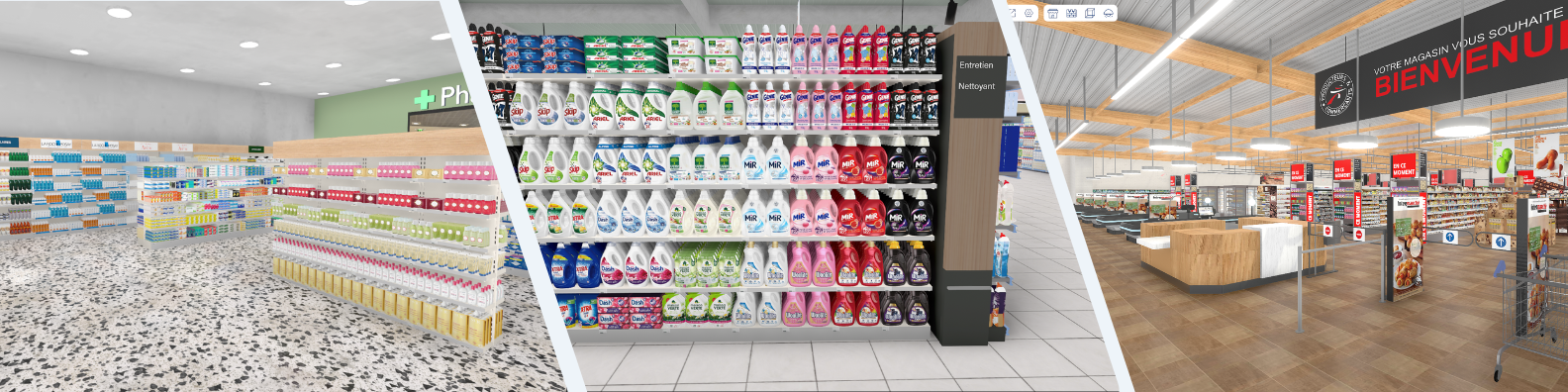
Given these challenges, one question becomes central: how can we effectively align strategy, planograms, and in-store execution? This is precisely where new-generation 3D merchandising tools , such as Retail VR, are a game-changer.
Trade marketing, planograms, and in-store execution: silos that remain too isolated
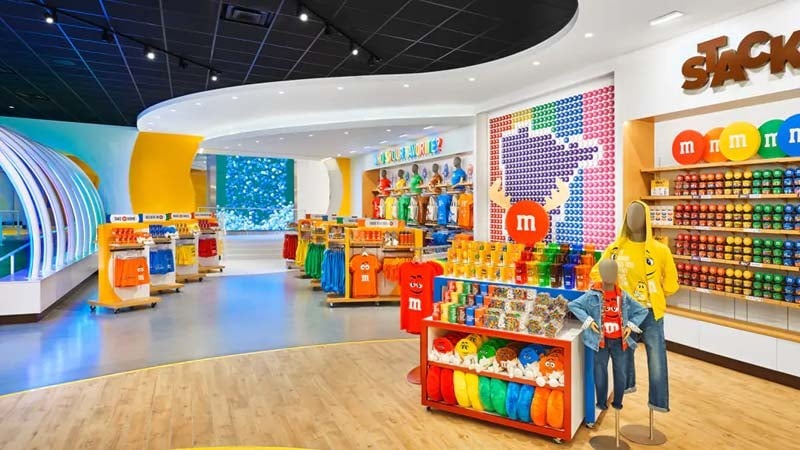
To understand the problem, we need to examine the three links in the merchandising chain that still struggle to communicate effectively:
- Trade marketing: Its goal is to bring the brand to life in-store (display design, promotions, cross-merchandising). However, these efforts often get stuck in PowerPoint presentations, PDF guidelines, or 2D visuals that sorely lack a realistic sense of how they’ll look in practice.
- The planogram: It structures the space (shelf facings, product assortment, shelf layout). While essential to performance, the traditional planogram remains a technical tool—dry and rarely viewed as a storytelling medium in the service of Category Management.
- Store execution (the weak link): At the end of the chain, field teams (area managers, department managers) must interpret complex guidelines in the face of significant local constraints. Without a clear visual projection, implementation becomes approximate.
Why the connection between strategy, plans, and the store has become critical
Today, market trends make this connection essential. Several trends are driving this need:
- The acceleration of promotional cycles (more campaigns, less preparation time).
- The proliferation of store formats (convenience stores, hypermarkets, supermarkets).
- The need for a measurable ROI for every marketing campaign.
- The need for flawless brand consistency, including on an international level.
Brands and retailers can no longer afford to operate in silos. They need a single collaborative tool capable of bridging the gap between strategic planning, merchandising design, and on-the-ground implementation.
The key role of the 3D planogram in this transformation
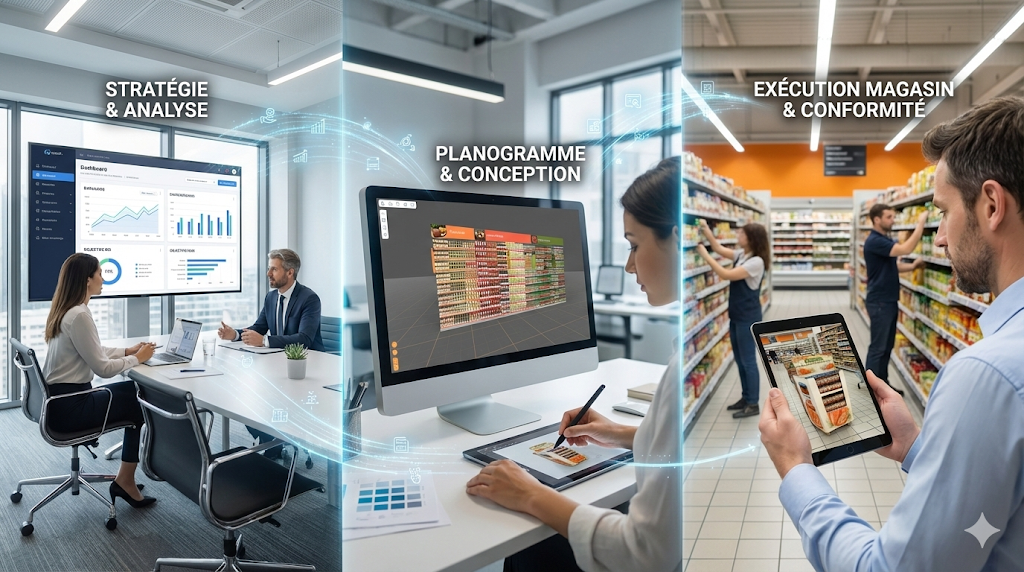
The 3D planogram marks a definitive break from traditional approaches.
From technical constraint to projection tool
Unlike a 2D planogram, 3D merchandising allows you to:
- View the display exactly as it will appear in the store.
- Incorporate point-of-sale materials, custom fixtures, in-store signage, and end-cap displays.
- Help teams instantly understand the trade marketing strategy.
It is becoming a true common language between marketing, category management, sales, and the field.
A decision-making tool, not just an execution tool
Thanks to 3D modeling, headquarters teams can:
- Test multiple deployment scenarios without deploying physical resources.
- Strike the right balance between commercial performance and visual impact.
- Validate concepts more quickly both internally and with partner retailers.
Retail VR: Connecting the Entire Value Chain, from Strategy to Execution
Retail VR is precisely in line with this approach to continuity, breaking down organizational silos.
A tool designed for all stakeholders
The platform enables the creation of immersive in-store environments that can be used directly by:
- Trade marketing teams: for activation, storytelling, and the placement of in-store displays.
- Category managers: responsible for optimizing shelf layouts, product assortments, and product placements.
- Sales and store teams: for clear guidance and 100% actionable instructions.
Improving warehouse operations through immersive visualization
Less interpretation, more compliance
An interactive 3D visual is far more intuitive than a paper planogram. Store teams can see at a glance:
- Where to place each product with pinpoint accuracy.
- How to install point-of-sale displays.
- What is the overall final look the brand is aiming for?
The results are immediate: fewer installation errors, fewer frustrating field returns, and significantly improved compliance with guidelines.
A massive operational time savings
3D deployment drastically reduces time-consuming back-and-forth between headquarters and the field, minimizes post-deployment corrections, and reduces the need to rely on costly external agencies for each format adaptation.
Manage store performance more effectively
Linking strategy, planogram, and execution also means equipping yourself with the tools to better measure performance.
With a retail execution solution like Retail VR, it becomes possible to compare multiple store layouts through A/B testing before a nationwide rollout, standardize best practices, analyze discrepancies between the concept and reality, and capitalize on the most profitable activations. Merchandising is no longer just about aesthetics; it becomes a true driver of business performance.
A key advantage for multi-brand and international deployments
For brands sold in multiple retail chains or countries, the challenge is twofold: ensuring global brand consistency while allowing for flexibility in local adaptation.
3D technology addresses this need by making it easy to adapt a single trade marketing concept to different store formats (from flagship stores to retail corners), tailor a planogram to local constraints, or scale an activation campaign based on a market’s level of merchandising maturity.
Conclusion: from fragmented merchandising to a finally seamless chain
Integrating trade marketing, planograms, and in-store execution is no longer optional. It is essential to ensuring sustainable performance in an increasingly complex and competitive retail sector.
By aligning strategic vision, merchandising design, and on-the-ground realities, 3D merchandising solutions foster a shared understanding, ensure rigorous execution, deliver measurable ROI, and enhance the skills of all your teams. From strategy to the sales floor, merchandising finally becomes a continuous, visual, and collaborative process—rather than a series of silos.
🚀 Ready to turn your dry PDF guidelines into immersive, actionable 3D experiences? [Request a Retail VR demo] and discover how we help brands align their strategy with in-store execution.