

Modern retail is facing increased competition. To stand out, store design can no longer be left to chance. The integration of high-performance merchandising software is essential for creating a strong visual identity and maximizing the appeal of sales spaces, whether physical or virtual.
What is visual merchandising?
Visual merchandising encompasses all visual marketing techniques used to showcase the product lineup and optimize the shopping environment. By coordinating lighting, colors, textures, in-store displays, and background music, this approach aims to create a welcoming atmosphere that builds customer confidence and encourages purchases.
The 4 Main Objectives of Visual Merchandising
1. Enhance brand identity
The retail location is the first physical point of contact with a brand’s world. The design, choice of furniture, and overall layout must accurately reflect the brand’s values, positioning, and history in order to foster a sense of belonging among consumers.
2. Guide and assist the shopper
A seamless customer journey reduces friction and enhances the overall experience. Visual merchandising uses clear cues (floor markings, signage, display tables) to intuitively guide visitors to new arrivals, promotions, or featured products.
- The IKEA Model: The company revolutionized the industry by creating realistic living spaces combined with mandatory directional signage on the floor. In response to changing consumer habits—particularly in downtown areas where space is more limited—the brand is evolving this model toward phygital and immersive shopping experiences to maintain customer engagement.

3. Encourage impulse purchases
Creating eye-catching visual breaks and showcasing complementary products encourages customers to add unplanned items to their original shopping cart. This impulse is amplified by targeted lighting choices or specific sensory experiences on the shelves.
4. Maximize profitability per square meter
The ultimate goal remains economic optimization. By structuring the space to increase the average basket size and inventory turnover, the brand secures its revenue and improves the operational efficiency of each shelf.
Case Studies: Leaders in Visual Merchandising
Apple's minimalist approach
Apple stands out for its sleek design, which emphasizes transparency and direct interaction:
- Urban and modern: Use of solid wood tables, glass partitions, and stainless steel.
- Hands-on experience: The products are displayed within easy reach, encouraging customers to interact with the devices in a seamless and intuitive way.
- Clear Visual Design: Storefronts and interior displays feature vibrant, minimalist visuals that catch the eye without overwhelming the space.

Nike's Immersive Storytelling
Nike is transforming its stores into true sports experience spaces:
- Theme: The collections tell a cohesive visual story, bringing together clothing, shoes, and accessories to offer a 360-degree product experience.
- Dynamism: The models strike dynamic poses (running, jumping) to illustrate how the product is used.
- Digitalization: Giant screens display videos of athletes and inspiring campaigns, while dynamic lighting creates shadow effects that highlight the technical innovation of the products.
5 Practical Tips for Optimizing Your Locations
- Apply the pyramid principle: Place your high-margin products at eye level (the center of the visual pyramid). Place secondary items or slow-moving items on the upper or lower shelves.
- Leverage sensory marketing: Complement the visual impact with an appropriate soundscape, a unique scent signature, and textured materials that invite touch.
- Be visually bold: Design eye-catching window displays or end-cap displays. The more memorable and aesthetically pleasing a space is, the more it will be shared on social media and attract customers in-store.
- Carefully analyze your target audience: Tailor your visual style to your target audience. A younger audience will respond more favorably to dynamic contrasts and trendy designs, while a premium approach will call for understated elegance and high-quality materials.
- Stage the display to suggest how the product is used: Don't just line up the products. Use decorative props to put the product in context and help customers imagine how they'll use it in their daily lives.

Conclusion: The Benefits of Retail VR Technology
Visual merchandising is a key factor in setting a brand apart from the competition. To help brands design high-performing retail spaces, Retail VR offers a centralized and agile merchandising platform platform.
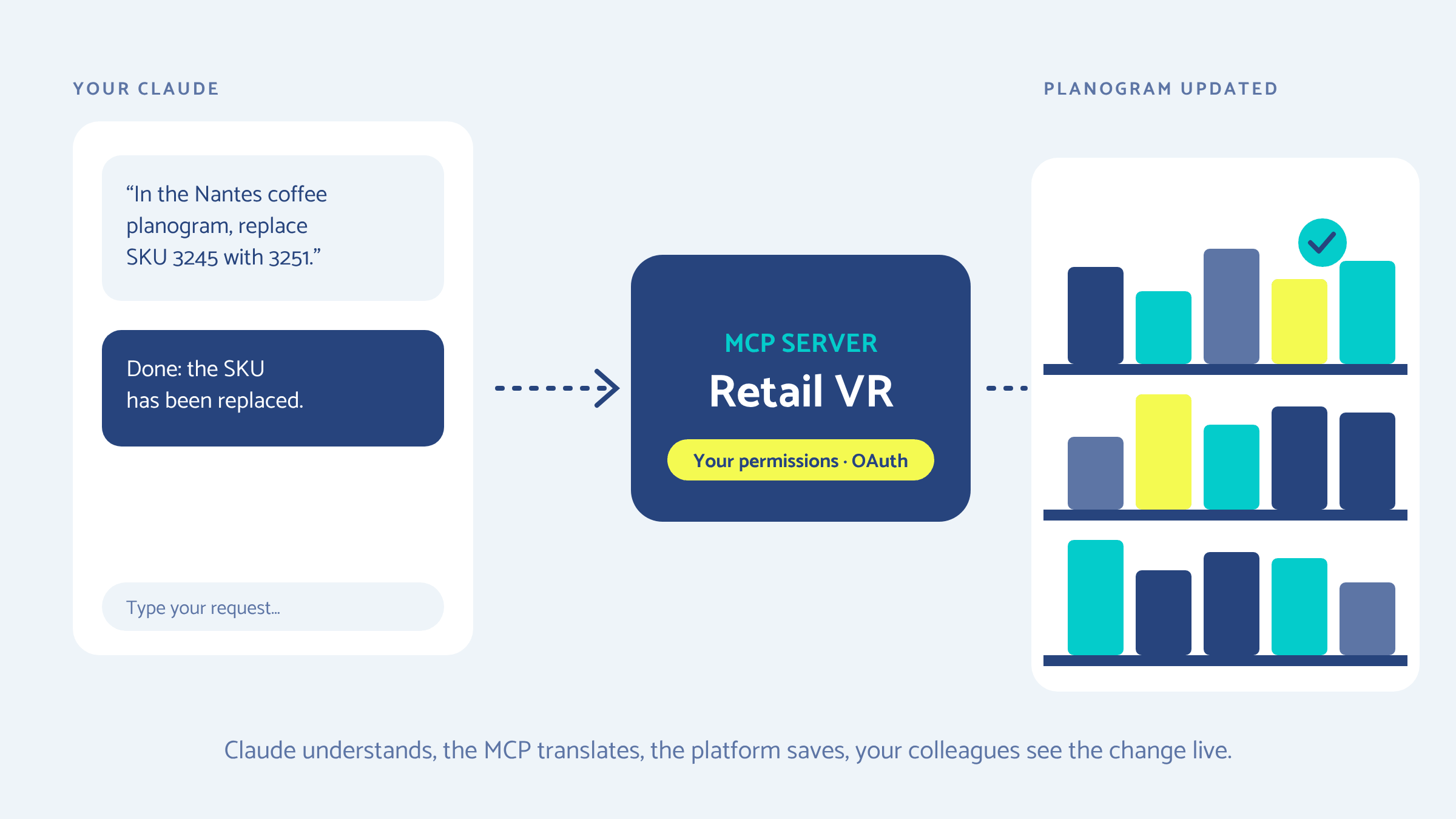
Thanks to our merchandising solution, you can instantly design your in-store promotional materials, adjust your displays, and generate automatic planograms directly in a virtual environment. Your concepts can be tested with shopper panels and adjusted with a single click before deployment, ensuring fast and flawless execution on the ground.