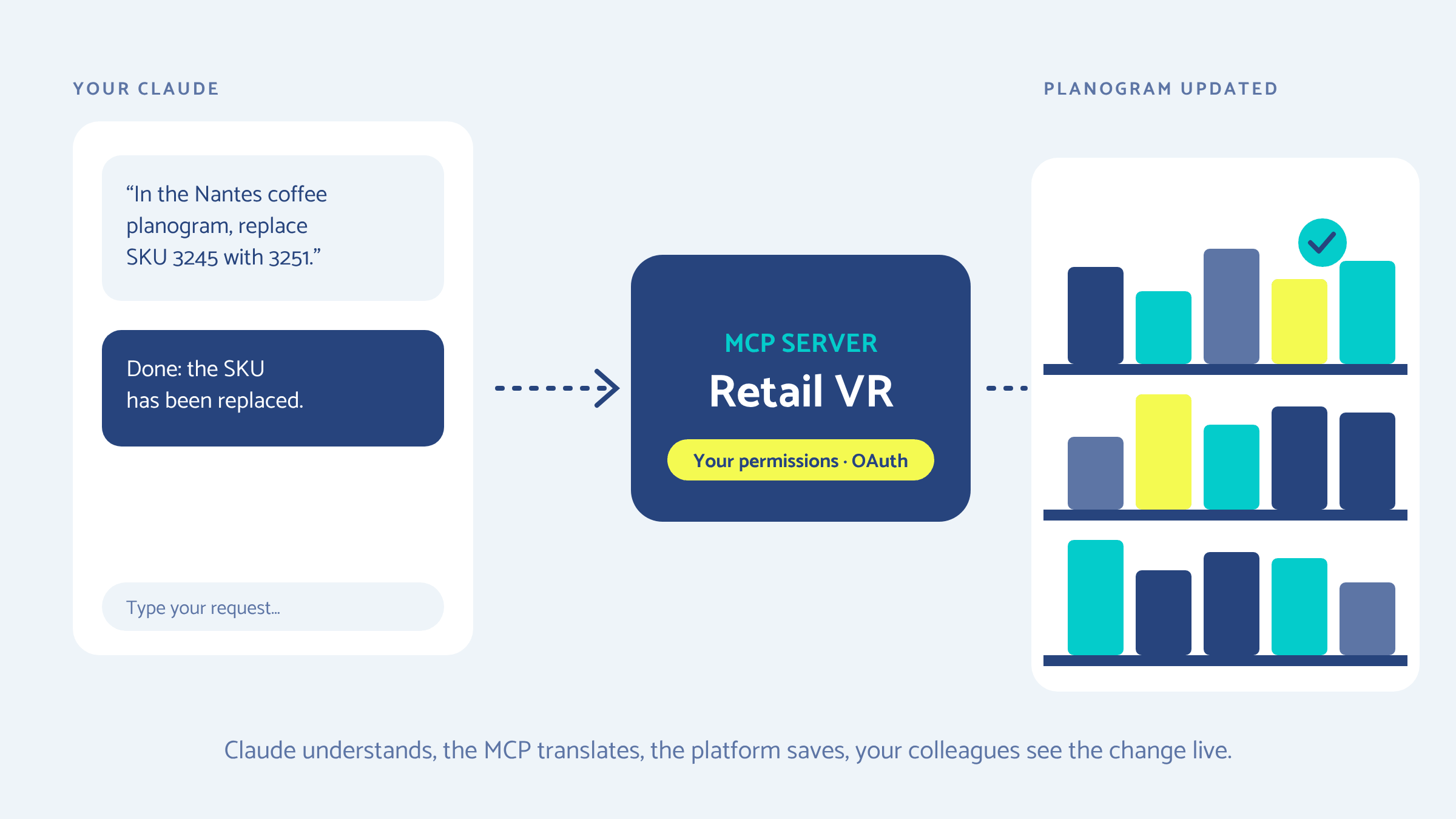


In an environment where pressure to deliver sales results continues to mount, the implementation of a next-generation merchandising software has become a major strategic driver for retailers. While artificial intelligence is already widely used for inventory management, its practical application to merchandising now makes it possible to automate complex processes, offering manufacturers unprecedented precision in managing their shelves and planograms.
AI: What Are the Challenges for the Retail Industry?
Artificial intelligence encompasses a range of technologies that enable machines to perform tasks previously reserved for humans: image recognition, natural language processing, decision-making, and content generation. In the retail sector, these technologies take various forms:
- Deductive AI: Analysis and Recommendation Algorithms.
- Generative AI: Content creation, visuals, and assisted planogram creation.
- Computer Vision: Image Recognition for Auditing.
The best-known AI uses in retail
AI has already proven its worth in several key areas when it comes to improving operational efficiency:
- Inventory Optimization: Demand Forecasting, Automatic Replenishment.
- Dynamic pricing: adjusting prices based on the context.
- Marketing targeting and personalization: product recommendations, customer segmentation.
- Automated content creation: product descriptions, visuals, e-commerce campaigns.
- Sales and customer behavior analysis: using cameras or transactional data.
But one of the next revolutions is in merchandising.
The Practical Benefits of AI in Merchandising Software
Merchandising is a field where decisions have traditionally been based on experience, field data, and a measure of intuition. Today, a modern merchandising software brings rigor and automation to the process on a large scale.
Image recognition for shelf auditing
Visual recognition makes it possible to automatically detect products on the shelves, their locations, and their compliance with a target planogram. This type of AI facilitates:
- Conducting a spot audit at the point of sale.
- Automatic generation of a corrective action plan.
- Creating a reliable database to help you adjust your strategies.
Generative AI and Planogram Design
Based on sales data, shelf space, and store type, AI can generate layout variations tailored to local conditions. This is where the power of new-generation planogram software : it ensures precise customization and improved execution, while freeing up time for headquarters merchandising teams.

Retail VR Expertise: From Concept to Execution
Since 2018, Retail VR has simplified the use of 3D technology. By developing patented technology, Retail VR enables brands to automatically model their products. Today, the startup is integrating AI technologies to take things even further.

Automated Audit and 3D Merchandising Simulation
Retail VR’s audit feature is based on advanced image recognition, which allows the planogram observed in-store to be reconstructed from photos taken on-site. The benefits are clear: a lightweight tool for sales teams and a reliable view of the in-store reality.

Automatic Planogram Reconstruction
Retail VR works with major industry players to enable the automatic generation of floor plans tailored to the physical constraints of each retail location. By using our shelf layout software, category managers can:
- Quickly create personalized recommendations.
- Reduce technical design time.
- Improve efficiency with precise layout guides.
To learn more, find out how Retail VR is transforming processes with its merchandising platform.

Conclusion
AI is transforming the merchandising industry by bringing precision and efficiency. At Retail VR, we believe that the future lies in technology that is aligned with real-world needs on the ground. Our 3D merchandising simulation solution helps improve team performance and facilitates the rollout of your strategy at the point of sale.
Ready to take your sales strategy to the next level?