

Retailers are rapidly adopting 3D technologies
The retail sector is rapidly adopting 3D technologies, which meet both the current challenges of digitalization and the profitability requirements that are essential in this sector. Once confined to the gaming or design sectors, 3D is now being adopted by brands and retailers to optimize their operations, both digitally and in physical stores.

The uses are multiplying:
- Immersive digital experiences (ex. Intermarché's Santa Claus workshop). With AR and VR technologies.
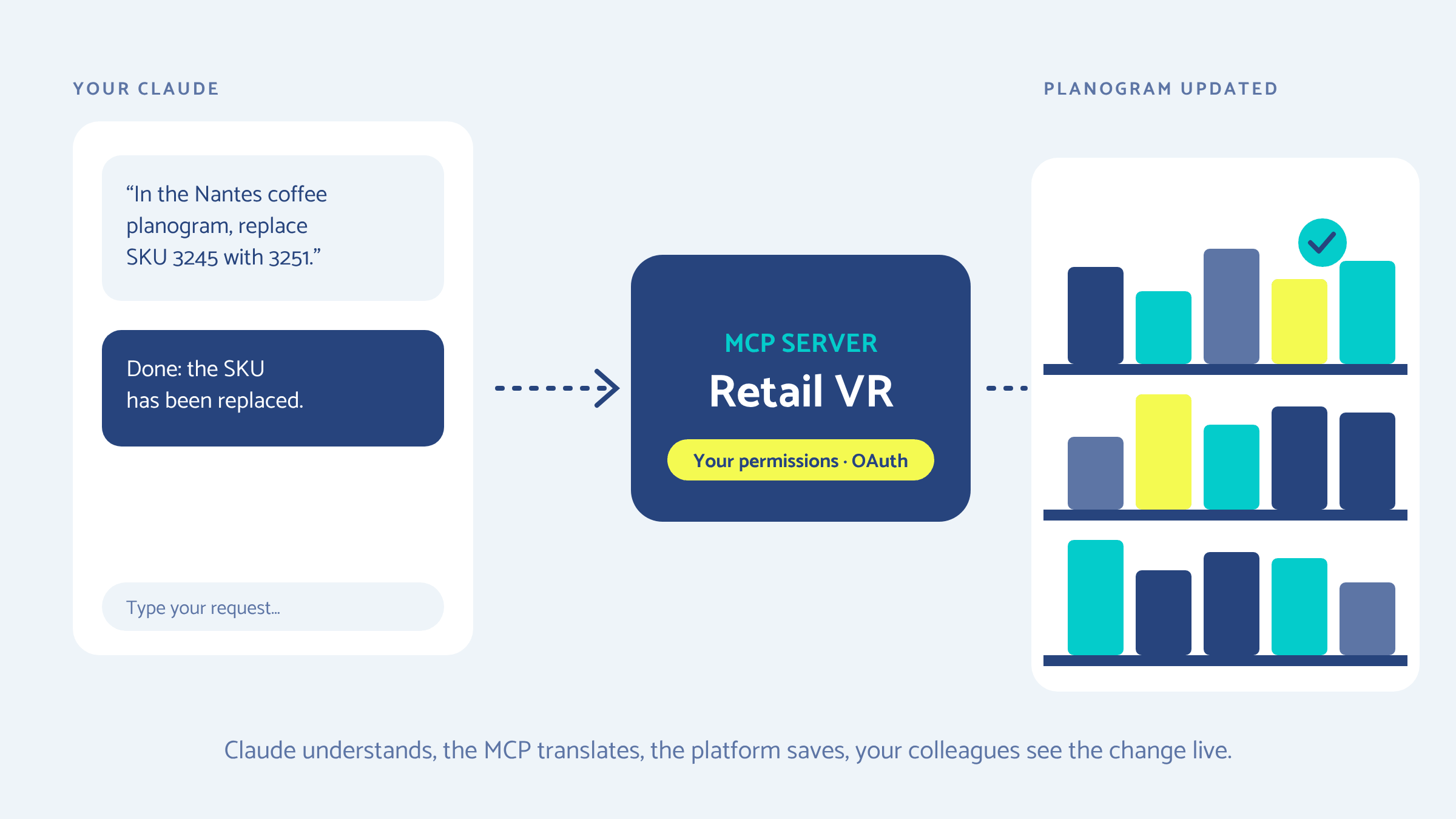
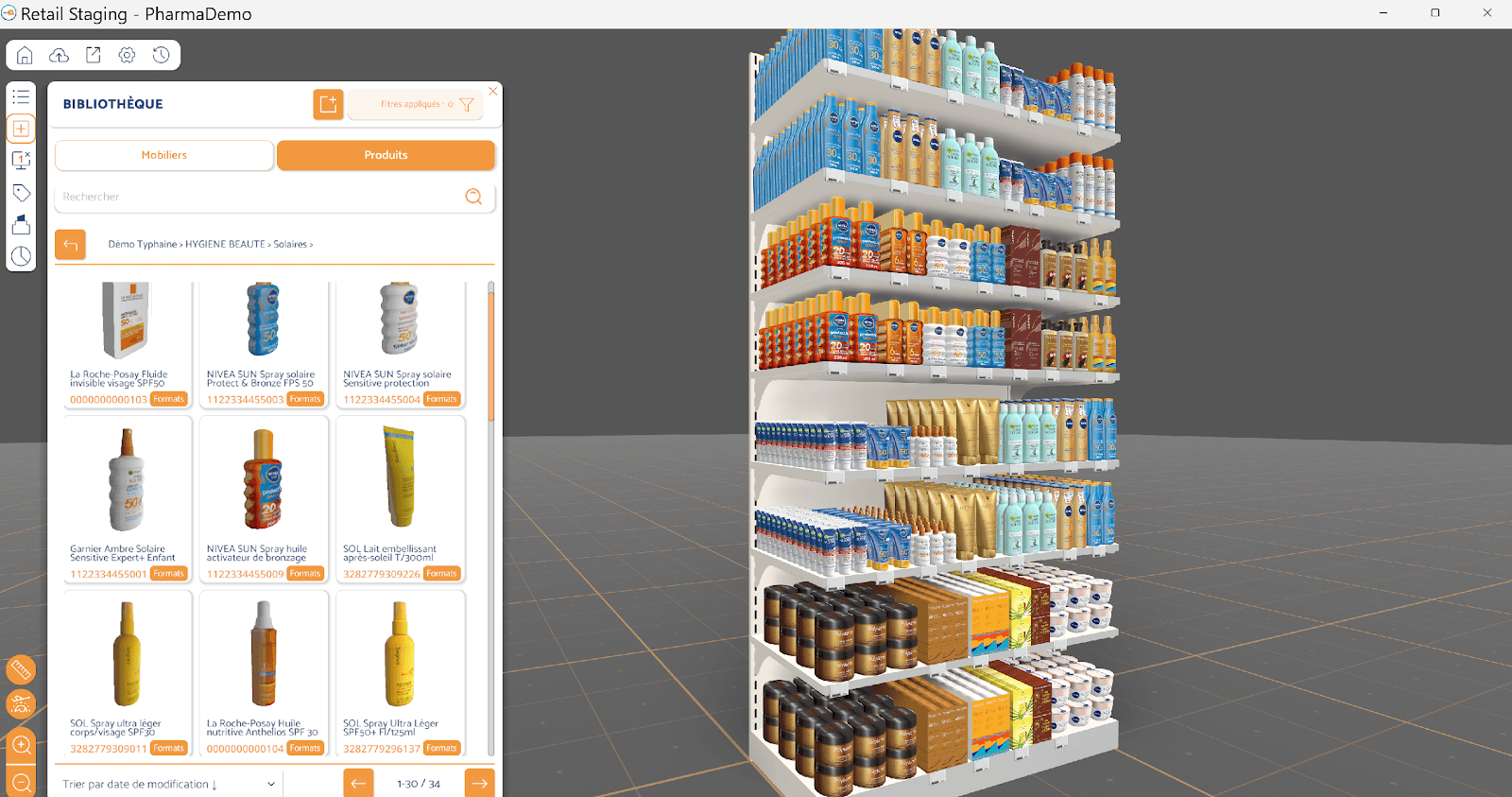
- Merchandising and 3D planograms with software Store Builder and Planogram Studio from Retail VR in Saas.
- 3D enriched product files used in e-commerce, communication and merchandising(e.g. Retail VR, Sketchfab).
The ROI of these solutions has been proven: they enable greater sales efficiency, an enriched customer experience and a reduction in operational costs. But to fully exploit these 3D technologies, it's crucial to structure and manage digital assets centrally. This is where Digital Asset Management (DAM)an essential tool for streamlining and automating the management of visuals, planograms and product sheets. This solution is often complemented by a PIM (Product Asset Management), which is responsible for storing and structuring product data.
1. Efficiently structure and distribute 3D assets with the DAM
With the rise of digital merchandising and 3D, managing product files is becoming a real challenge. Like traditional 2D images, 3D assets (GLB, OBJ, GLTF, FBX formats) need to be accessible and reusable across different channels to ensure the successful execution of a multi-channel strategy:
- E-commerce (interactive product sheets).
- Merchandising tools (3D planograms, POS displays).
- Mobile applications and digital experiences (augmented reality, digital twins).
A high-performance DAM allows you to :
- Centralize all product files to avoid dispersal of assets and ensure they are updated in real time.
- Pool resources: the same 3D file can be used in all business tools, guaranteeing omnichannel consistency.
- Streamline file distribution to e-commerce platforms, merchandising software and consumer applications.
2. DAM + Retail VR: automated merchandising and planograms
Integrating a DAM with Retail VR solutions brings immediate gains in efficiency and productivity:
- Automated 3D product modeling for planograms.
- Real-time updating of assets in merchandising tools.
- Save time and reduce errors by limiting re-typing and avoiding obsolete versions.
Case study: Retail VR & Keepeek for La Redoute
Retail VR has partnered with Keepeek, a leader in DAM solutions, on a project with La Redoute. The goal: to automatically populate product pages with images and 3D files, ensuring seamless and consistent management across all distribution channels.
3. A key tool for the retail business
The use of a DAM enriched with 3D is a major asset for all retail professions:
- Category Manager → Optimization of planograms and assortments.
- Trade Marketing → Rapid creation and distribution of POS materials and store signage.
- Merchandising → Tests and immersive visualization of shelf displays before deployment.
With a DAM + 3D approach, companies can ensure fluid asset management, while accelerating their digital merchandising projects.
Conclusion
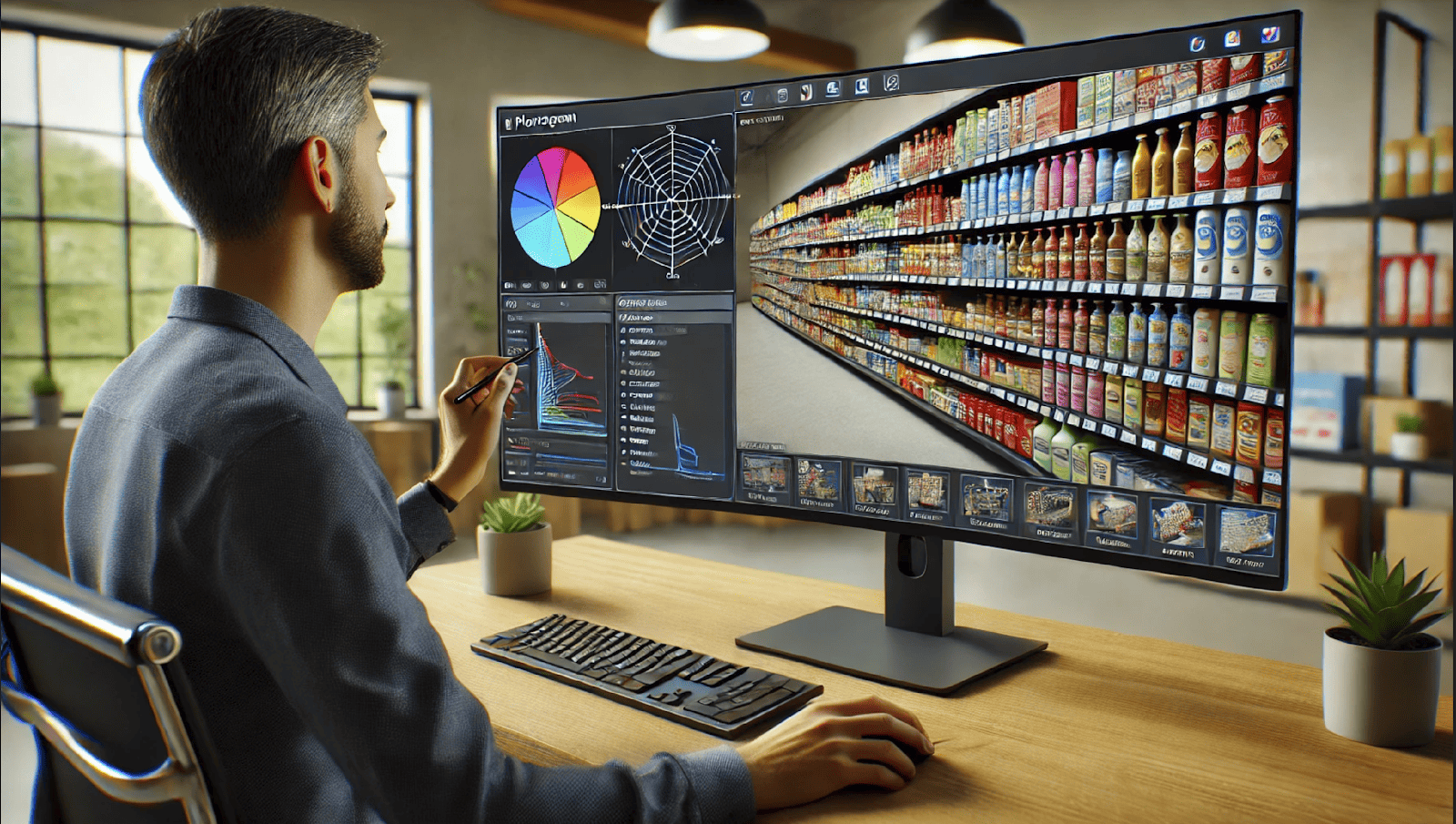
The growing adoption of 3D technologies in retail is forcing brands and retailers to optimize the management and distribution of their product files. A high-performance DAM becomes a key solution for pooling assets, automating merchandising workflows and guaranteeing omnichannel consistency.
By coupling a modern DAM with Retail VR tools, retailers can boost productivity, homogenize content and maximize operational efficiency.