

The on-trade channel: a strategic channel with its own rules
The CHR channel (Cafés, Hotels, Restaurants, also known as the on-trade or HoReCa) is a major commercial lever for beverage, food and snacking brands. France has more than 200,000 active on-trade establishments, and the commercial foodservice market is reshaping itself in 2026: hotel occupancy is holding up, restaurants are under pressure, but the premium segment is growing.
The on-trade distribution chain and its key players
| Player | Role | Merchandising challenge |
|---|---|---|
| On-trade distributor (France Boissons, Métro, Transgourmet...) |
Intermediary between the brand and the establishment | Winning over the distributor = key to network listing |
| Café / bar owner | Final decision-maker on in-venue placement | Direct persuasion: visuals + display ROI |
| Contract catering manager | Manages the buffet / cafeteria assortment | Planogram adapted to the self-service format |
| Hotel F&B manager | Defines the bar menu, minibar and corners | Product presentation in a hotel setting |
Sources: On-trade market: 2025 review and 2026 outlook · CHR: definition, key figures and challenges for brands — go-sidely
The 4 on-trade sales areas to stage in 3D
The counter
A high-traffic zone and the top priority for impulse products (snacks, confectionery, premium beverages). 3D simulation lets you test different counter display configurations (height, density, signage) before producing the first physical prototype.
The bar fridge
A key competitive space for beverages. Facings in a bar fridge directly drive the consumer's purchase decision. Immersive 3D simulation lets you visualize the exact interior of the fridge with products in place and optimize their visibility.
The dining room / tasting area
Floor displays, table talkers, signage: every staging element influences add-on orders. 3D simulation validates the visual concept before the physical POS materials are produced, reducing errors and waste.
The menu and menu board
For beverages and snacks, placement on the menu is the equivalent of facings on the shelf. A visual simulation of a menu board that gives the brand's products pride of place is a powerful sales argument in the distributor meeting.
Structuring your on-trade merchandising recommendations with 3D
Step 1 — Model typical establishment formats
Traditional café, cocktail bar, brasserie, fine-dining restaurant: each format has its own constraints. Retail VR's 3D library lets you create reference models for each type of on-trade establishment, which sales teams then adapt during visits.
Step 2 — Create 3D assets for on-trade POS materials
Counter displays, bottle glorifiers, table talkers, menu displays: all modeled in 3D with Retail VR. This lets you validate their visual impact before production and avoid poorly sized POS materials.
Step 3 — Present to the distributor in mixed reality
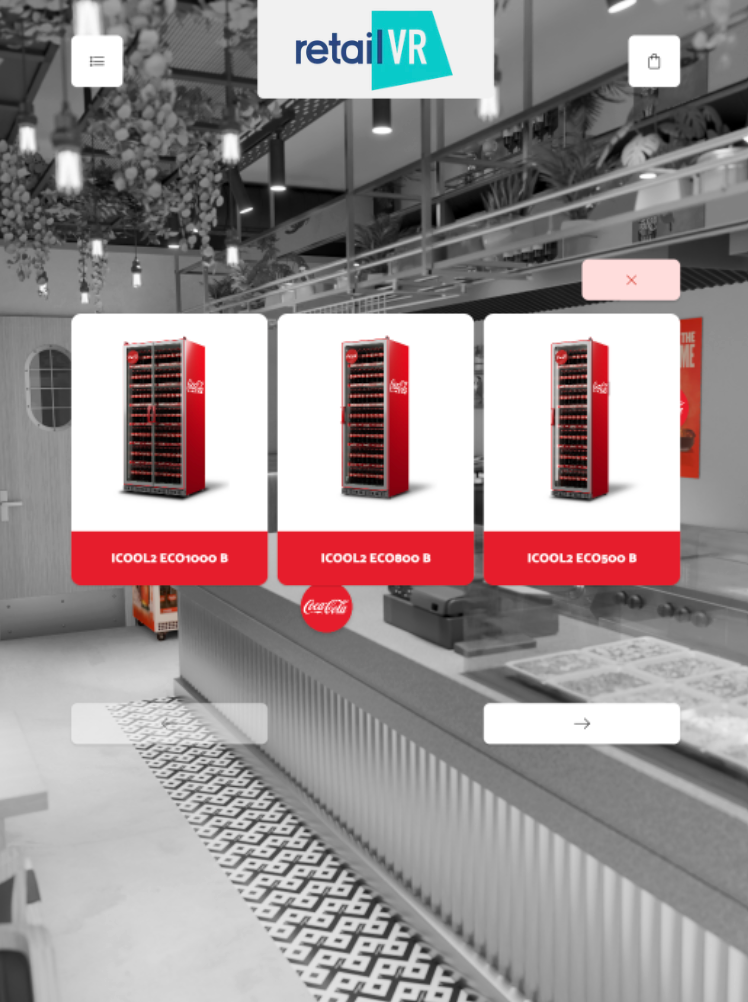
In the meeting with the distributor's on-trade area manager, presenting the 3D display concept — counter, fridge, dining room — in mixed reality on a tablet transforms the conversation. The distributor sees exactly what their restaurant customers will see.
Step 4 — Equip on-trade reps with field AR
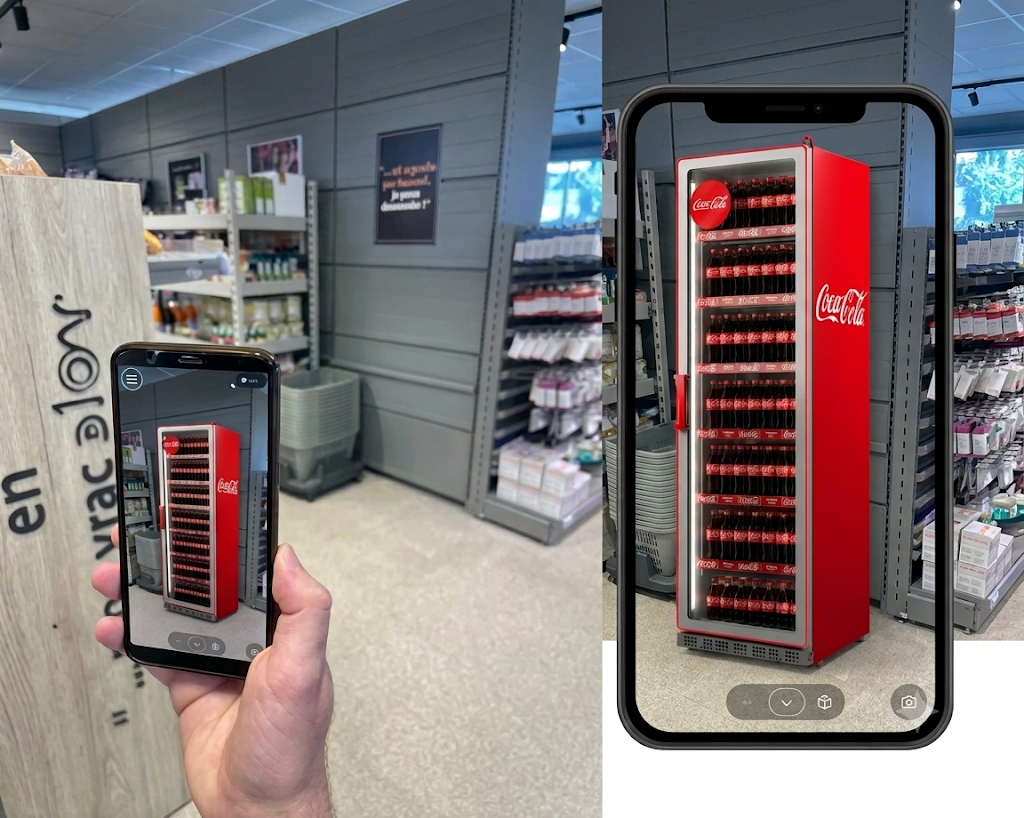
An on-trade sales rep who visits 10 to 15 establishments a day can show the recommendation in AR on a tablet, right in the context of the venue. With the Instore Activation solution, the café owner sees the products placed on THEIR counter, with THEIR dimensions.
Sources: On-trade beverage wholesaler — Milliet · On-trade and wine shops: challenges for winemakers — Winetailors
Conclusion
The on-trade is one of the least equipped channels when it comes to merchandising — and that is precisely why it offers the greatest opportunities for differentiation. In 2026, brands that show up with 3D tools in a world still dominated by PowerPoint and PDF gain a decisive edge. To structure your on-trade trade marketing approach with Retail VR 3D simulation, contact our team.
Want to learn more? Request a demo →


.webp)
.webp)
.webp)

