


The French pet market passed the €6.8 billion mark in 2025 (Xerfi) and is expected to reach €7.5 billion by 2027. With 79 million pets in French households and 60 to 61% of French people owning at least one, the sector is enjoying structural growth driven by product premiumization, the rise of services and the growth of pet parenting, the humanization of pets that is turning every owner into a demanding consumer. Amid intensifying competition between specialist pet stores, grocery retailers and e-commerce, merchandising in the pet food, pet care and accessories aisles has become a central lever for differentiation. 3D simulation is changing the game.
The pet retail market in 2026: key figures and dynamics
A fast-growing sector despite a tough economic climate
While overall consumer spending is declining, the pet sector is holding firm. French consumers keep spending on their pets even in times of inflation. Average annual spending per pet reaches €1,200 to €1,500 in 2025, compared with €943 in 2022. Pet food is driving growth (+16.5% in 2023), followed by accessories and wellness services (grooming, pet health insurance, veterinary teleconsultation).
| Indicator | 2025-2026 figure | Source |
|---|---|---|
| French pet market revenue | €6.8bn (2025), €7.5bn targeted for 2027 | Xerfi / FACCO |
| Number of pets in France | 79 million (incl. 16.6M cats, 9.9M dogs) | FACCO / Kantar 2025 |
| Households owning a pet | 60–61% of French people | FACCO / Kantar 2025 |
| French pet food revenue | €5.7bn in 2024 | Made in FR / Xerfi |
| Maxi Zoo — 2024 omnichannel revenue | €602M (+12%) | LSA / Fressnapf |
| Maxi Zoo — 2025 store network | 452 stores (66 openings in 2025) | LSA Conso 2026 |
| Maxi Zoo — 2028 target | 600 stores | Vertone / LSA |
| Avg. annual spending per pet | €1,200 – €1,500 (2025) | Businesscoot / IFOP |
Sources: Xerfi — Pet market 2027 · Vertone — Pet retail: a growth lever in 2025 · LSA — Maxi Zoo 2025 results · Made in FR — The pet store market in France
Competing distribution channels
Pet retail is undergoing a major reshuffle among four channels battling for market share:
- Specialist pet stores (Maxi Zoo, Animalis, Tom & Co, JMT): 22.4% of pet food sales, and growing fast. Maxi Zoo is opening 66 stores in France in 2025, a record. Expert advice and range breadth are their key differentiators.
- Grocery retailers (Leclerc, Carrefour, Intermarché): the leading channel by volume thanks to their natural foot traffic, but losing ground to specialists in the premium and care segments.
- Garden centers with pet departments (Jardiland, Gamm Vert / Teract): under pressure from declining footfall. The pet department has to make up for the slowdown in other categories.
- E-commerce (Zooplus, Zoomalia, acquired by Holding Nicole): a stable complementary channel, strong on recurring food purchases. Brands need to align their physical merchandising with their digital presence.
💡 Did you know?
68% of French people consider their pet a full member of the family (Ipsos). This humanization, known as "pet parenting", is transforming the pet store shopping experience: owners are no longer just looking for the cheapest option, they want the best for their pet. This paradigm shift makes the quality of merchandising and in-aisle advice even more decisive.
Sources: Ipsos — Pet parenting and how French people relate to their pets, 2025
What makes pet store merchandising different
An aisle that appeals to the heart as much as the head
Pet store merchandising follows different rules from conventional grocery FMCG. Shoppers are often highly emotionally involved: they are buying for a being they love. They are sensitive to perceived quality, ingredient transparency and consistency between a brand's positioning and its values. A poorly organized aisle, with premium products lost among entry-level ones, directly damages brand perception.
The sector's 5 specific merchandising challenges
- Managing range breadth: a pet food aisle can hold several hundred SKUs for dogs and cats alone. Organizing this assortment clearly (by species, age, diet and format) while showcasing premium products is an ongoing challenge.
- Premiumization and product education: premium products (organic, grain-free, insect protein, cold-pressed raw) need to be explained. A 3D planogram lets you test configurations that include educational shelf signage and measure their impact on shopper understanding and conversion.
- Multiple species side by side: dogs, cats, exotic pets, birds, fish: each species has its own product universe. Clearly delineating species zones while encouraging cross-purchases is a major readability challenge.
- Partial seasonality: flea and tick treatments in spring and summer, thermal and wellness products in winter, immune supplements in the fall: the health and care aisle requires frequent seasonal adjustments.
- Diverse store formats: a 600 m² (6,500 sq ft) Maxi Zoo does not have the same shelf constraints as an 80 m² (860 sq ft) pet corner in a garden center. Manufacturers must adapt their planograms to each format without it becoming an unmanageable workload.
How 3D simulation is transforming pet store merchandising
1. Create planograms tailored to every store format
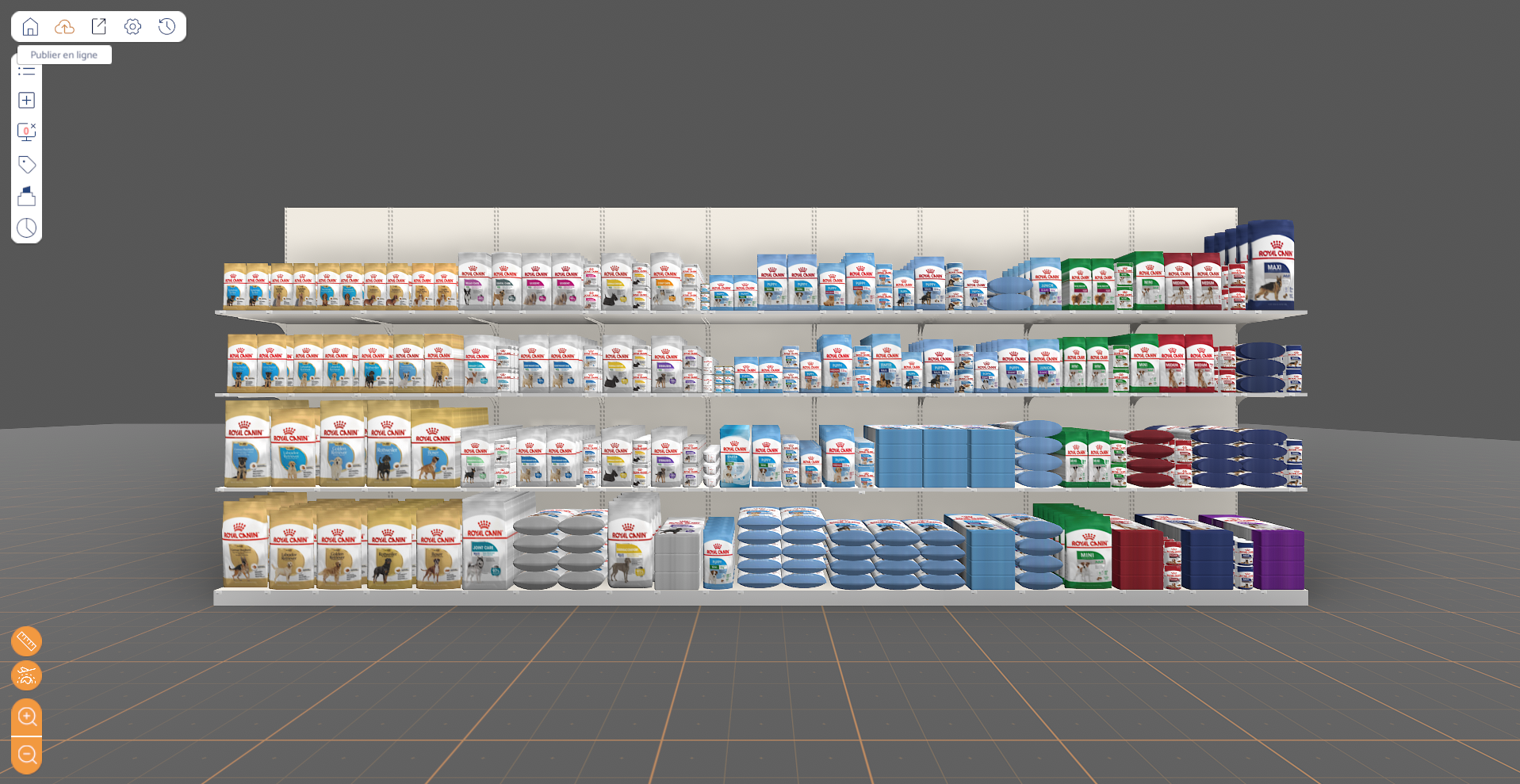
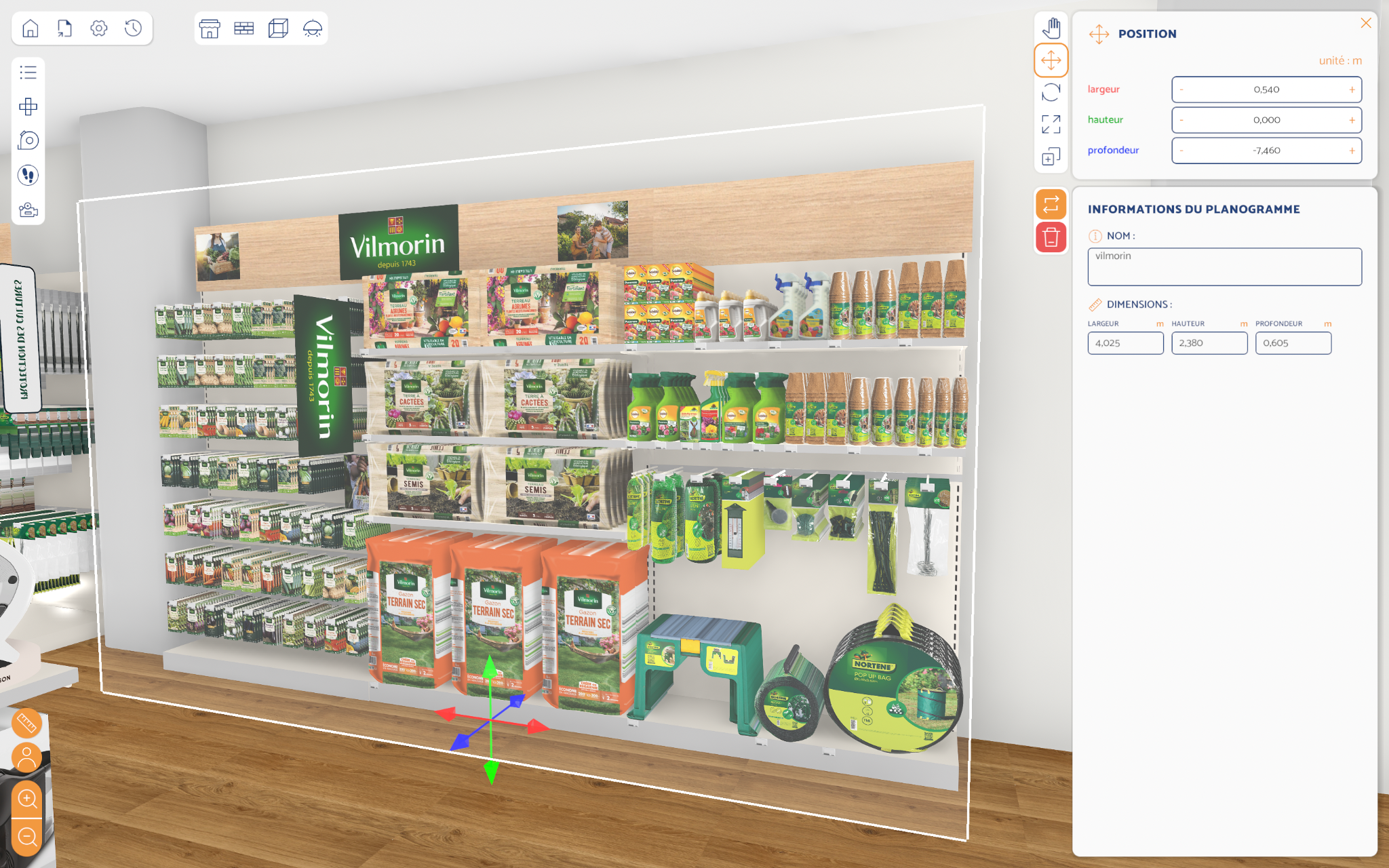
Maxi Zoo is opening 66 stores in France in 2025, in formats ranging from 300 to 1,500 m² (3,200 to 16,000 sq ft). A pet food manufacturer such as Mars Petcare (Whiskas, Pedigree, Royal Canin), Nestlé Purina (Pro Plan, Purina One) or Hill's has to adapt its planograms to each of these formats. With Retail VR's 3D planogram software, a standard aisle concept is automatically adapted to the fixture dimensions of each store, cutting customization work from several days to a few hours.
2. Present recommendations to buyers in mixed reality
For a pet food manufacturer looking to secure better placement in Maxi Zoo or Animalis aisles, the sales meeting is decisive. 3D presentation in mixed reality on a tablet lets the buyer visualize the finished aisle, with the brand's products well positioned and the retailer's exact fixture dimensions, and make a decision during the meeting. No more coming back with a costly physical mock-up or a hard-to-read 2D diagram.
This persuasive approach is documented at MAM Baby, which uses the same method for its pharmacy aisles: the rate of new SKUs listed increased 2 to 3 times. Read the customer case →
3. Test aisle configurations with real shoppers
Before rolling out a new pet food aisle concept across a national network, Retail VR's virtual shopper studies let you test different configurations with a panel of pet owners. Gaze zones, dwell time in front of each category, pick-up rates for premium vs. entry-level products: this data, collected in 2 weeks in a true-to-life 3D environment, directly informs layout decisions before any physical rollout.
4. Validate seasonal POS materials before production
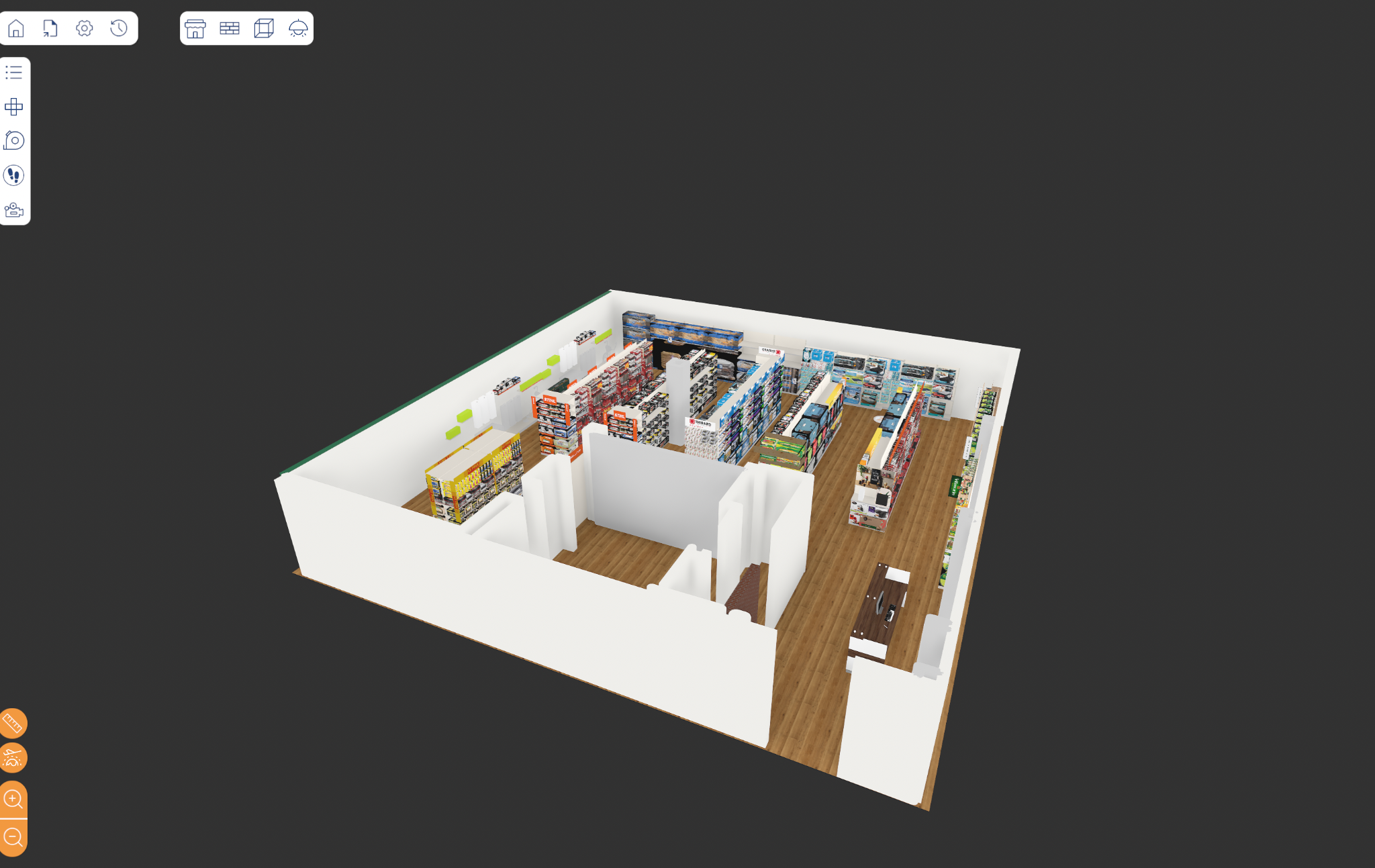
Flea and tick treatments in spring, Christmas gifts for pets, immune supplements in the fall: every key retail moment comes with dedicated POS materials. In 2026, the Virtual First method makes it possible to visually validate every POS element in real store conditions (lighting, fixtures, competing products on shelf) before launching physical production. The result: zero wrongly sized displays, zero reprints.
5. Measure in-store compliance across franchise networks
Tom & Co, JMT, Terranimo: the pet retail sector is largely organized into franchise networks in which each franchisee manages their aisle with a degree of autonomy. Retail VR's AI image recognition lets the brand's sales rep photograph the aisle during a store visit and instantly get a compliance report against the recommended planogram, with no time-consuming manual audit.
Priority pet store aisles for 3D optimization
| Aisle | Specifics | Priority 3D lever | 2026 stakes |
|---|---|---|---|
| Dog / cat food | Very broad range, premiumization | Planogram by species / age / diet | Mars investing €100M in France in 2026 |
| Health and flea & tick | Strong seasonality, product education is key | Educational signage simulated in 3D | Evolving regulations |
| Accessories and comfort | Impulse + considered purchases | Simulated cross-merchandising with food | Strong growth in pet gifts |
| Hygiene and grooming | Service + product, dedicated space possible | 3D grooming shop-in-shop concept | Maxi Zoo expanding its grooming service |
| Exotic pets (rabbits, birds, fish) | Niche universe with strong potential | Staging by species universe | Growth of exotic pets in France |
| Premium / organic food | High margin, engaged shoppers | Simulated hot-zone placement | Strong demand for natural/organic in 2026 |
Sources: LSA — Mars Petcare investing €100M in France in 2026 · Petactu — Pet market growth 2025
Real-world examples: Retail VR customer cases applicable to pet retail
Lactalis Beurres & Crèmes — Winning buyers over in a single meeting
Lactalis Beurres & Crèmes used the Retail VR Virtual Showroom to present its new aisle concept to grocery retail buyers. The result translates directly to pet food manufacturers: "We managed to close all of our agreements in a single meeting". The immersive rendering made buyers feel as if they were standing right in the aisle, making it easier to win their buy-in for the new merchandising approach. This result earned Lactalis the 2020 SIRIUS Award for customer experience from the Institut du Commerce.
| Commercial agreements | All agreements closed in a single meeting |
| Differentiation | Standing out with retail buying offices thanks to an innovative tool |
| Buyer immersion | 3D rendering makes buyers feel like they are right in the aisle |
| Recognition | 2020 SIRIUS Award for customer experience |
→ Read the Lactalis customer case →
H2O at Home — Launching a new collection across a national network
H2O at Home used the Retail VR Virtual Showroom to present a new range to its network of 5,000 people, compared with 1,000 at its usual in-person events. For pet food manufacturers launching a new range (organic, premium, grain-free) who need to present it to their field sales teams and to pet retail buyers, this virtual launch model applies directly.
| Network reach | 5,000 people reached vs. 1,000 in person |
| Accessibility | National network covered with no travel |
| Presentation quality | 360° showroom true to the actual products |
| ROI | Optimized ROI on network engagement |
→ Read the H2O at Home customer case →
MAM Baby — Multiplying listings in a specialist channel
MAM Baby, a leader in the pharmacy channel, shows how 3D presentation in mixed reality transforms sales meetings in specialist retail. The approach is identical for a pet food manufacturer in pet stores: create a realistic 3D universe around its products, adapt the planogram to the dimensions of each store format, and present it immersively during the buyer meeting. The result: the rate of new SKUs listed increased 2 to 3 times.
| Listing rate | ×2 to ×3 on new SKUs listed |
| Presentation quality | 3D product universe that makes pitches more compelling |
| Network adoption | 30 field licenses + 2 head office licenses |
| Ease of use | Quickly adopted by sales teams |
→ Read the MAM Baby customer case →
The golden rules of pet store merchandising
Rule 1 — Organize by species, then by need
The first level of segmentation in a pet aisle is species: dogs on one side, cats on the other, exotic pets in their own space. Within each species area, organizing by need (everyday food / health and care / accessories and comfort) is easier to navigate than organizing by brand. 3D lets you test both approaches and measure their impact on shopper behavior before rollout.
Rule 2 — Place premium products at eye level
The eye-level zone (120–160 cm, roughly 4–5 ft) generates 2 to 3 times more sales than the bottom shelves. In a pet food aisle where margins on premium products (Royal Canin, Hill's, Orijen) are significantly higher than on entry-level ones, optimizing vertical placement is a direct profitability lever. A 3D planogram lets you simulate exactly what shoppers will see at each height and check that the highest-margin products are in the hot zone.
Rule 3 — Create lifestyle-based cross-merchandising islands
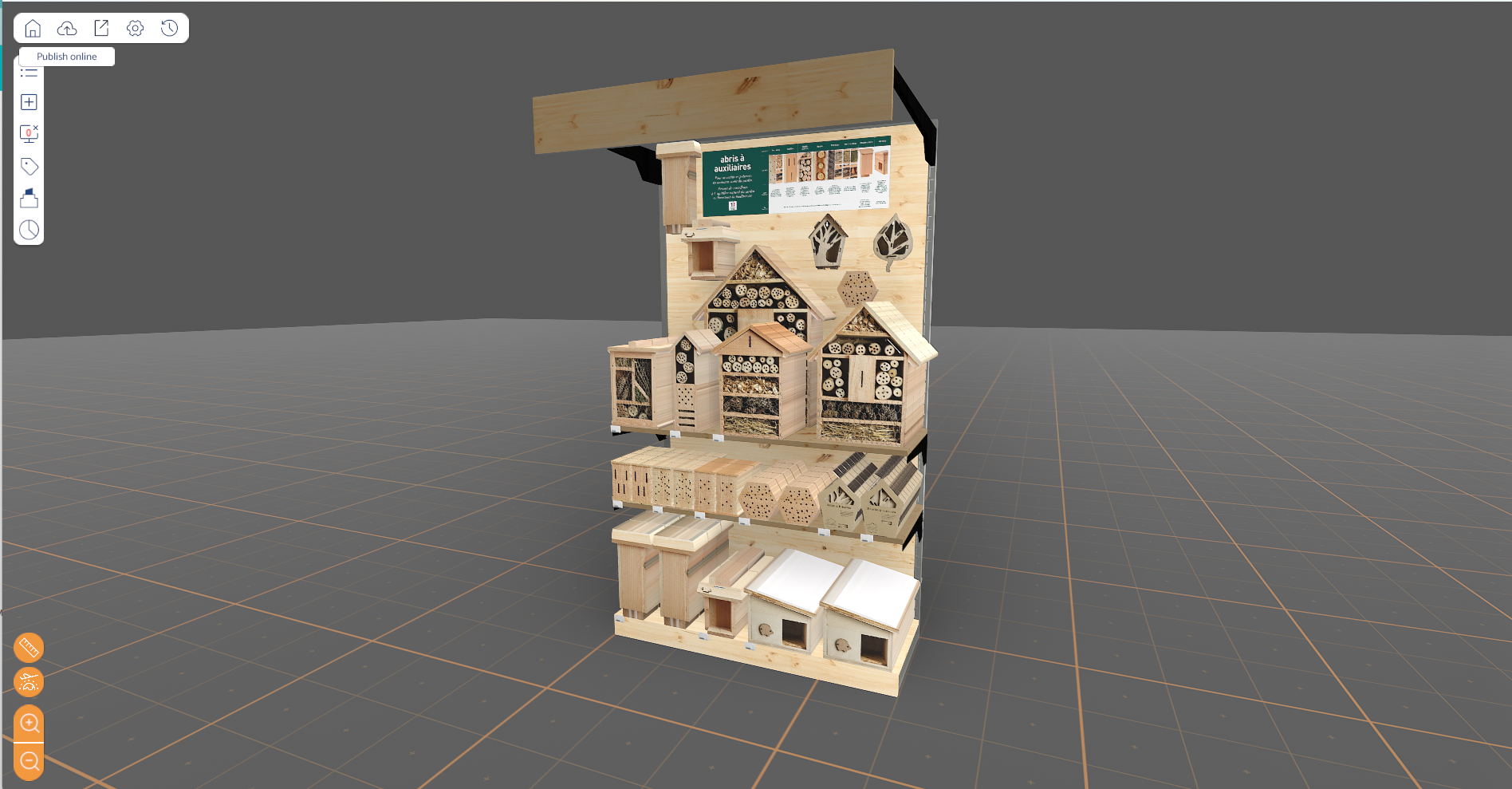
An owner of an active dog who buys high-energy food is also likely to buy a harness, a performance leash or training treats. Creating cross-merchandising islands around owner profiles (active, senior pet, puppy, indoor cat) is a powerful lever for increasing average basket size. Virtual shopper studies let you test these configurations and measure their real impact on baskets before rollout.
Rule 4 — Pay attention to signage for considered purchases
Premium, organic or veterinary products require product education, which traditional retailers provide through in-person advice. But shoppers who come in outside peak hours need that information right at the shelf. Testing the readability and impact of signage elements (shelf stoppers, benefit callouts, QR codes) in 3D simulation before production helps avoid costly mistakes.
Rule 5 — Measure compliance regularly across franchise networks
In a franchise network such as Tom & Co or JMT, each franchisee tends to customize their aisle according to their own preferences. In-store compliance measured by AI image recognition makes it possible to detect deviations at every sales rep visit and take targeted action, without tying up significant resources in full audits.
Pet store merchandising KPIs: before / after 3D simulation
KPI
Without a 3D tool
With Retail VR 3D
Planogram compliance rate
40 – 55%
75 – 90%
Aisle concept validation time
3 – 6 weeks
2 – 5 days
Listing rate at first presentation
40 – 60%
75 – 90% (×2-3 observed)
Cost of concept prototype / seasonal POS
€3,500 – €8,000
< €500 (3D validation first)
New range launch reach (network)
1,000 people (in person)
5,000+ (virtual event)
Customization time per store format
2 – 5 days
A few hours (automatic adaptation)
The trends that will accelerate the digitalization of pet store merchandising
Maxi Zoo's rapid expansion is creating a need for standardization
With 66 openings in 2025 and a target of 600 stores by 2028 (up from 452 at the end of 2025), Maxi Zoo needs tools to roll out its aisle concepts quickly and consistently across a fast-growing network. This is exactly the use case the Retail VR cloud collaboration platform is designed for: sharing validated 3D planograms with every team in one click, wherever they are.
Major brands are investing heavily
Mars Incorporated has announced an investment of more than €100 million in France in 2026 to strengthen its manufacturing hubs. Nestlé Purina is opening a new plant in Latin America. These industrial investments come with growing pressure on the quality of merchandising execution at the point of sale. Brands can no longer afford to have their new premium products poorly placed or invisible on shelf.
Natural and premium products as a merchandising driver
Natural, organic, grain-free and insect-protein products are growing strongly in 2025-2026. These products, which are more expensive and carry a more complex brand story, need dedicated spaces, clear signage and hot-zone placement. 3D simulation makes it possible to design these premium spaces and validate their impact before asking the retailer to put them on shelf.
Sources: LSA — Mars investing €100M in France in 2026 · Toute la franchise — Pet retail trends 2026 · Comdewouf — Pet market 2026
Conclusion
In 2026, the pet market is one of the most dynamic and competitive in French retail. Maxi Zoo is opening 66 stores a year, Mars is investing €100 million, and pet food manufacturers are competing for the best shelf positions in a constrained space. In this context, merchandising quality (planograms tailored to each format, immersive presentations in buyer meetings, measured in-store compliance) is a direct commercial lever. Retail VR's 3D simulation enables manufacturers and retailers to optimize each of these dimensions, with measurable results from the very first year. To learn more about our solutions for specialist channels, explore our customer cases or contact our team.
Want to optimize your pet store aisles with 3D? Request a demo →


.webp)
.webp)
.webp)

