

Introduction: How are virtual stores revolutionizing online shopping?
What is a virtual store?
A virtual store is a virtual space that lets consumers buy products and services in an immersive online store. Unlike a physical store, a virtual store can be accessed from anywhere, at any time of day.
But what are the differences between virtual stores and e-commerce?
Virtual Store vs. E-commerce
E-commerce and virtual stores are two concepts related to online retail. However, there are a few notable differences between them. E-commerce, also called electronic commerce, refers to selling goods or services online through a dedicated website. Transactions take place entirely online and products are shipped directly to the customer.
Virtual stores, on the other hand, are online platforms that allow brick-and-mortar stores to extend their online presence. Products can be delivered in store or to the customer’s home. In addition, virtual stores immerse customers in a virtual store environment.
In short, e-commerce focuses on selling online through dedicated websites, while virtual stores allow physical stores to extend their online presence and offer an immersive virtual shopping experience.
According to Fevad, e-commerce keeps on growing. In Q3 2022, its growth rate was up 16.8% compared with Q3 2021. And for good reason: virtually every brand now sells its products online, either through its own website or via marketplaces.
Virtual stores are useful for companies selling products or services online, since they allow customers to see and virtually handle products before buying them.
Background: How are virtual stores revolutionizing online shopping?

Benefits of virtual stores
- Customer experience: virtual stores enhance the customer experience. These immersive experiences are shaped by a range of factors such as merchandising, the choice of music and colors, product placement, promotional displays, and more.
- Accessibility: virtual stores are available 24/7, from anywhere. There’s no need to travel or to log in with a virtual reality headset. All you need is a phone, a tablet, or a computer. Users simply click the buy button to add the products they want to their cart.
- Wide selection: like e-commerce websites, virtual stores offer a very wide range of products, accessible from product pages or product carousels. A virtual store’s product range is unlimited, which is not the case in a physical store. For customers, it’s easier to compare prices and products across a broader offering.
- Savings: prices in virtual stores are often more competitive because of their low operating costs. Companies don’t have to pay rent for a store or hire staff. These savings can therefore benefit customers, who enjoy lower prices than in physical stores.
- Personalization: customers can filter products by their preferences, such as color, shape, size, and so on. This lets them personalize their customer experience.
- Data collection: retailers can collect data on customers’ preferences and buying habits and offer them personalized recommendations.
- International reach: virtual stores enable companies to reach a global audience, which can help increase sales.
- Reviews & communities: virtual stores let customers chat with virtual sales associates and leave reviews of the products they ordered. These reviews can be helpful for other customers who are about to check out. They can also benefit the company, which can use this feedback to identify areas for product improvement.
Drawbacks of virtual stores
While virtual stores offer many advantages, they also have several drawbacks:
- Competition: as virtual stores become more and more common, companies need to stand out even more. It is essential to personalize the immersive experience and make it reflect the brand universe. Promoting your virtual store is also a must.
- Data security : virtual stores store customer information of varying sensitivity, such as banking details or phone numbers. Companies must therefore take security measures to protect this information from cyberattacks. This responsibility generally lies with the CMS the virtual store is connected to (PrestaShop, Shopify, Magento).
- Logistics: companies need infrastructure to store their goods. They must also guarantee efficient delivery to their customers and depend on logistics providers.
- Customer satisfaction: brands must satisfy their customers as best they can, both to build loyalty and to acquire new customers. Negative reviews can lead to lost customers, a damaged brand image, and therefore lower sales and revenue.
Gen Z and virtual stores

First of all, what is Gen Z?
Generation Z is made up of young people born between the late 1990s and the early 2010s. It grew up with digital technologies and social media. This generation is particularly receptive to technological innovation, which makes it an ideal audience for virtual reality.
VR, and virtual stores in particular, offer a unique experience that makes users feel fully immersed in virtual environments. VR headsets and virtual stores let people enjoy new experiences and explore virtual worlds. Gen Zers are excited about discovering new technologies and experiences.
According to a study conducted in October 2015 by Greenlight VR and Touchstone Research, nearly 8 in 10 Gen Zers say they are interested in virtual reality.
Examples of brands using virtual stores
Many brands use virtual stores to sell their products online. Here are a few examples:
Nike

The sportswear brand offers an online virtual store where customers can browse and buy its RTFKT products in a virtual store on Roblox. Customers can explore the various collections of virtual sneakers, apparel, and sports accessories and buy directly online. The experience is made immersive by features such as 360-degree views, zoom, and product presentation videos.
Ralph Lauren

Ralph Lauren has also launched its own virtual store, developed by Obsess.
Ralph Lauren’s virtual store is an immersive online shopping experience that lets customers interactively discover the brand and its most beautiful stores around the world.
The virtual store displays product pages and collections in photorealistic detail.
This immersive virtual tour lets customers dive into the brand universe and explore the stores in question as if they were physically there.
Lacoste
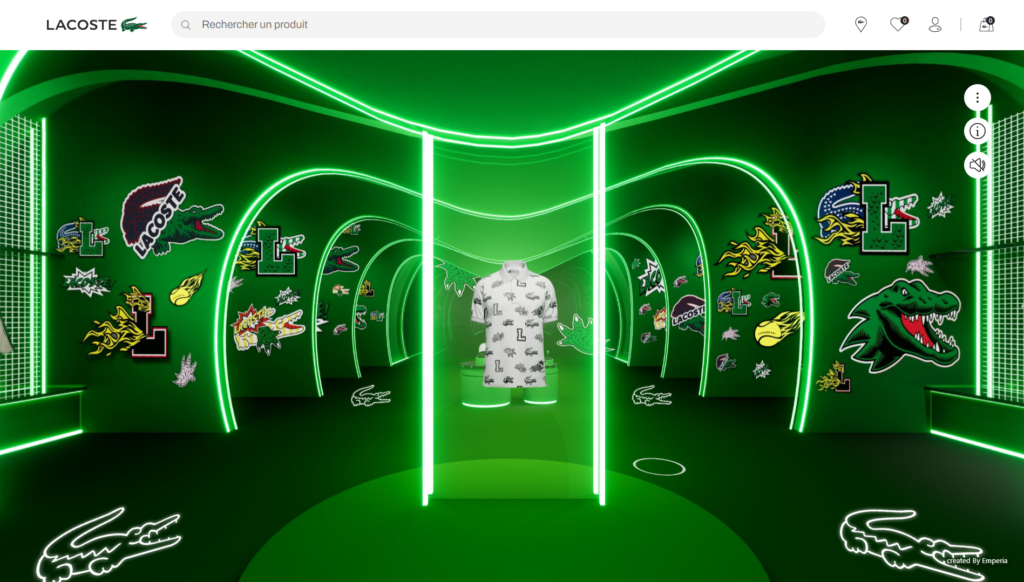
Lacoste launched its very first virtual store, developed by Emperia.
Unlike Ralph Lauren’s, Lacoste’s virtual store is a VR virtual store that offers the brand’s customers a unique, immersive experience.
It reflects the elegance, sportiness, and refinement that are hallmarks of the brand.
Customers can view products in 3D and access product pages.
La Nouvelle Cave

La Nouvelle Cave was founded in 2019 and is based in Paris. It belongs to the Casino Group, which generated revenue of €30.5 billion in 2022.
The company offers innovative digital advice! In addition to its expert wine merchants, it features a digital sommelier developed with Matcha, a wine-focused start-up. Using a light-guidance system, it steers customers toward the right bottle.
La Nouvelle Cave developed a virtual store with our teams. The goal is to engage Gen Z in an immersive, interactive, and content-rich way. Just as in a physical store, customers can chat with the wine merchant, walk through the aisles, interact with 3D-modeled products, and add them to their cart.
Notably, all of the store’s content is updated automatically through an API integration with the Shopify CMS. Customers therefore don’t need to leave the app to complete their purchase.
Another distinctive feature: this virtual store is optimized for mobile to make m-commerce easier. Let’s not forget that Gen Z was born with a phone in hand!
The benefits of La Nouvelle Cave’s virtual store
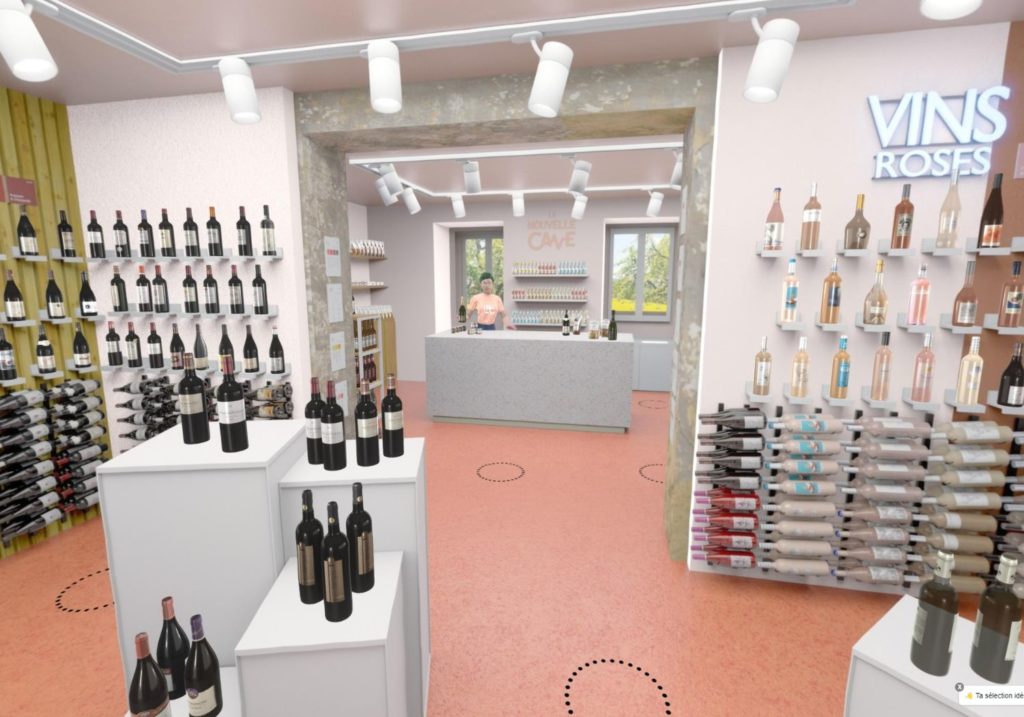
La Nouvelle Cave saw a 15% increase in traffic over the 3 months following the launch of the solution. The virtual store also generated 6% additional sales and a 36% increase in average basket size. The launch of the virtual store also generated a great deal of media coverage.
What’s more, La Nouvelle Cave was shortlisted for the Innovation award at the Favori e-commerce awards and took second place for the virtual store it developed with the Retail VR platform!
We are very proud to have contributed to this award.
Conclusion: How are virtual stores revolutionizing online shopping?
Virtual stores offer brands significant advantages in terms of brand image, visual merchandising, and product interactions. Customers are increasingly looking for immersive experiences, and virtual stores meet this demand by providing a more interactive and personalized online shopping platform.
However, there are also drawbacks, particularly regarding the technology needed to build and maintain these platforms. It is important to strike the right balance between virtual interaction and human interaction, whether through a sales associate or a bot.
Despite these drawbacks, virtual stores offer real opportunities for brands looking to differentiate themselves and deliver unique experiences to their customers. By using this kind of technology, brands can strengthen their brand image, improve their visual merchandising, and offer more engaging product interactions.


.webp)
.webp)
.webp)

